Faire: Verified View
When we expanded Faire into apparel, we hit a frustrating wall. Retailers wouldn't sign up without previewing the merchandise first, but brands were hesitant to share pre-order inventory on an open platform where loose verification left them vulnerable to fast copycats. As the lead designer, I resolved this tension by building a controlled preview system that restricted visibility to verified buyers, protecting brand IP while unlocking a major new revenue segment.
Role: UX Lead (Research, Interaction Design, System Strategy
Output: Successful launch to faire.com
Duration: 1.5 Weeks (Rapid MVP Cycle)
Impact: Met the acquisition target of 531 high-quality apparel brands by the end of Q3
The Paradox
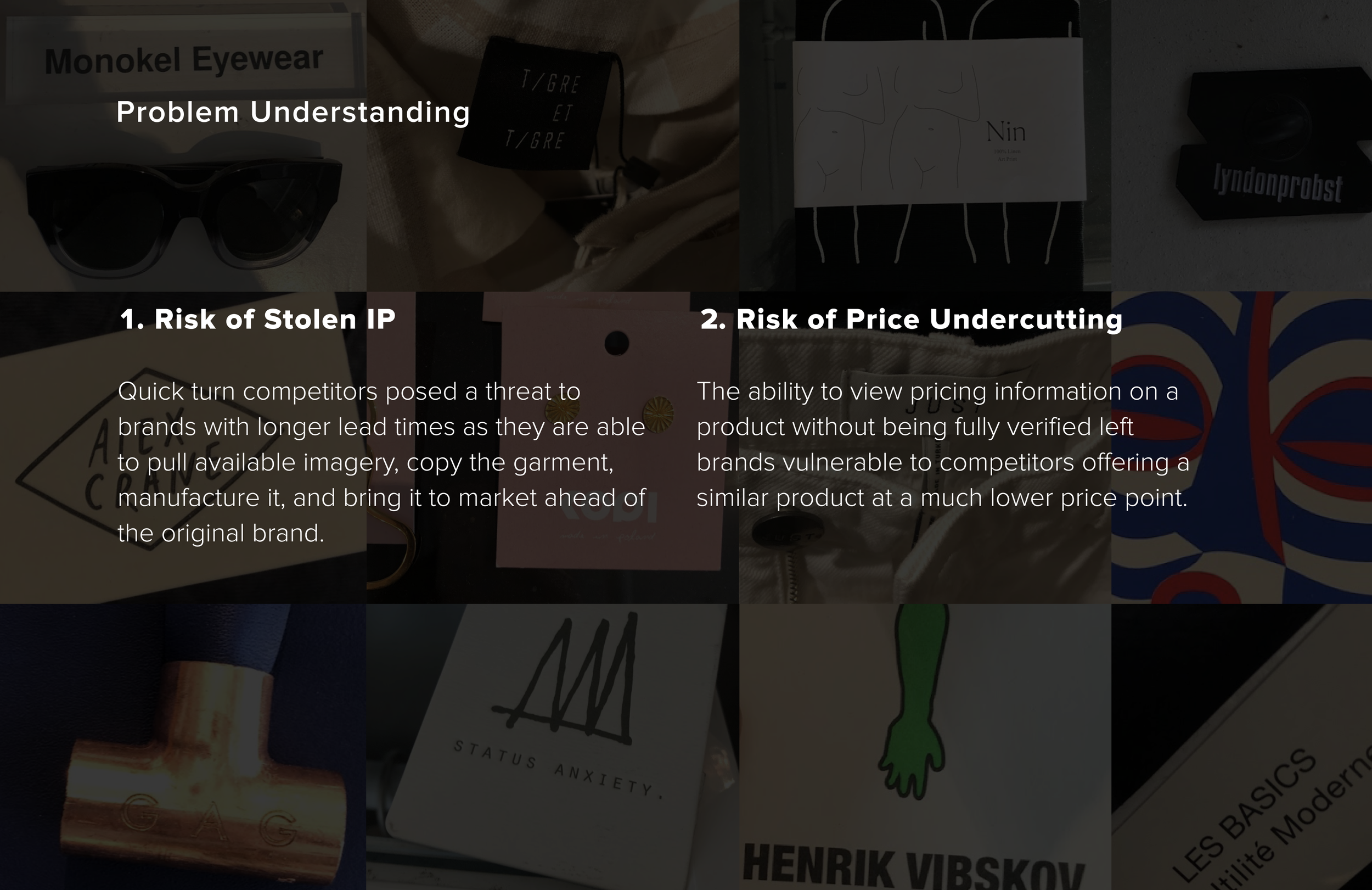
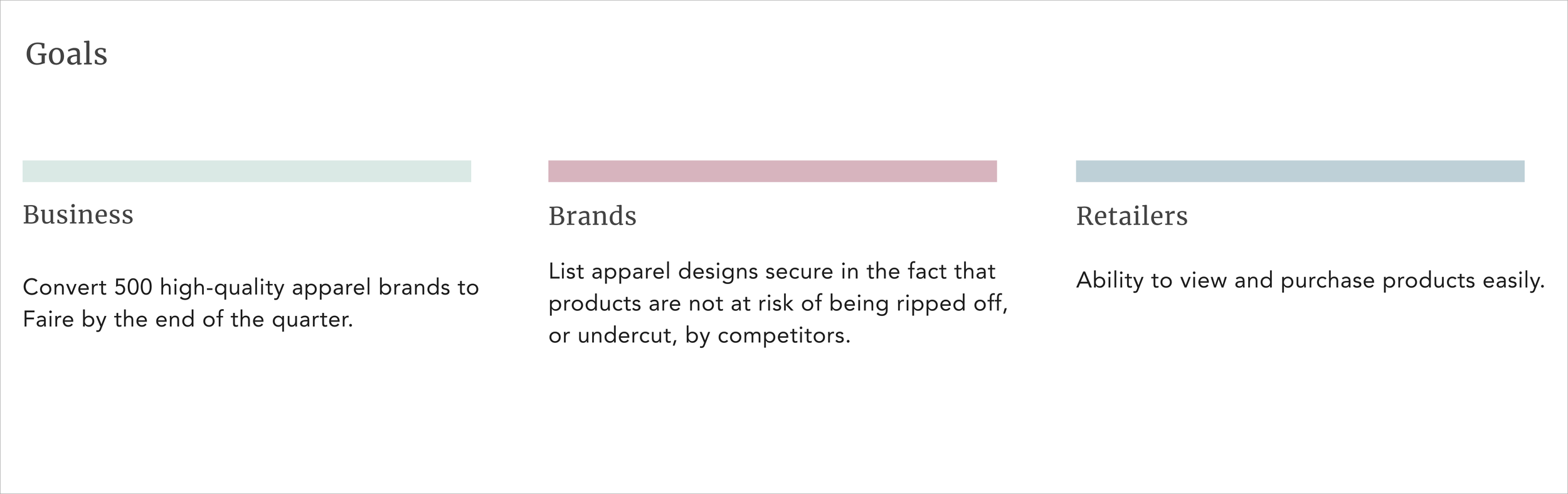
Faire’s primary goal for the quarter was to acquire 500 premium apparel brands. The business strategy relied on keeping the catalog openly browsable to entice new retailers to sign up and buy. However, our marketplace analytics and support tickets indicated that this open-browsing policy was directly causing apparel makers to flee the platform. With the apparel item browsing set up the way it was, brands were faced with two massive systemic risks if they continued on Faire’s platform: unverified competitors stealing their proprietary designs, and bad actors undercutting their wholesale pricing.
States and Entry Points
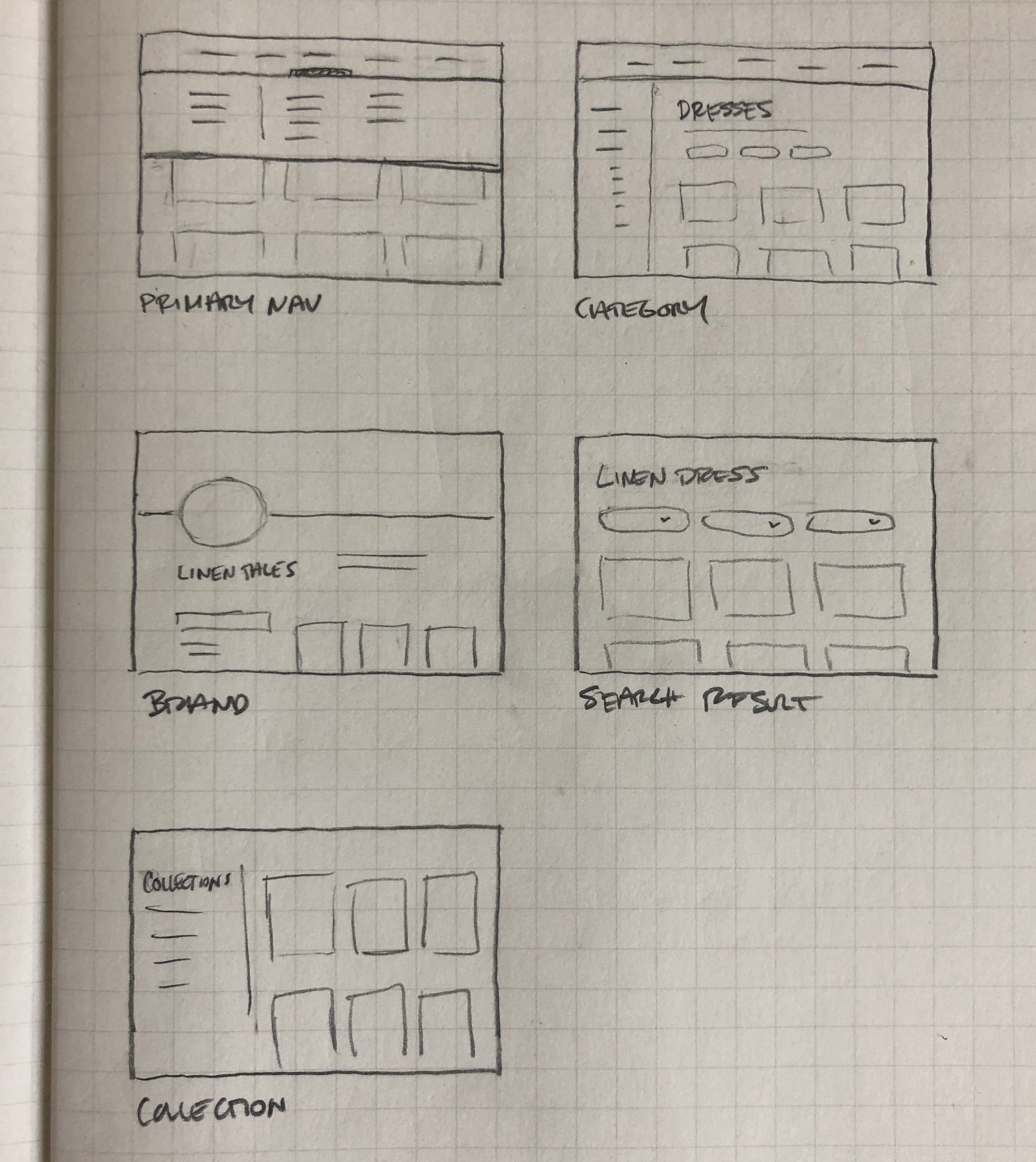
In addition to these pathways, we also identified the states a user could occupy when viewing inventory on Faire:Faire's strategy of attracting buyers by allowing unverified users to view inventory conflicted directly with the makers' safety. To find where the system was leaking data, I audited the platform to map every possible entry point. I isolated five key navigation pathways that led unverified users to a product detail page, ranging from primary navigation to special collections.
From there, I cross-referenced those pathways against the four technical user states:
Logged in, verified
Not logged in, verified
Logged in, unverified
Not logged in, unverified
Explorations
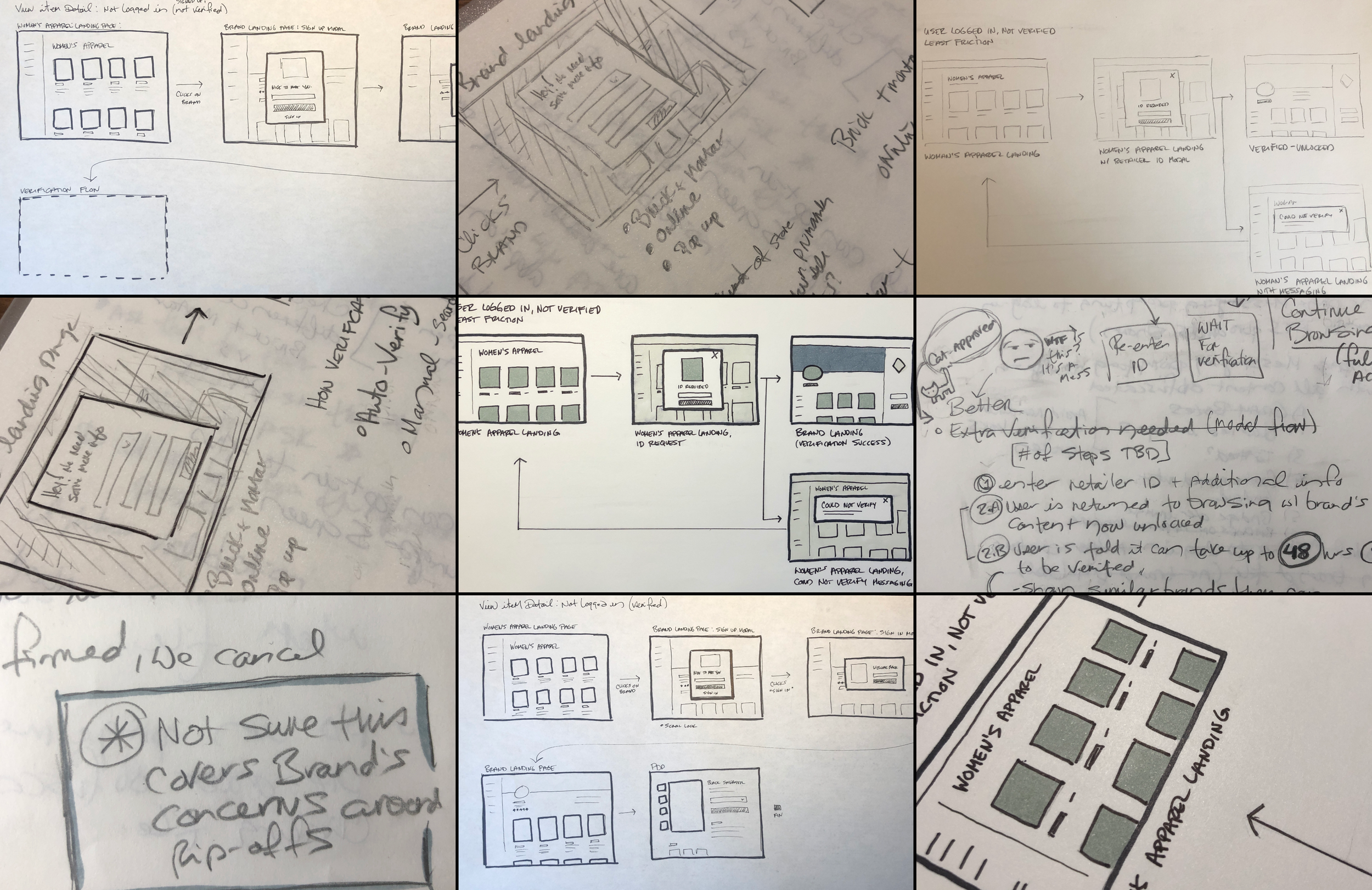
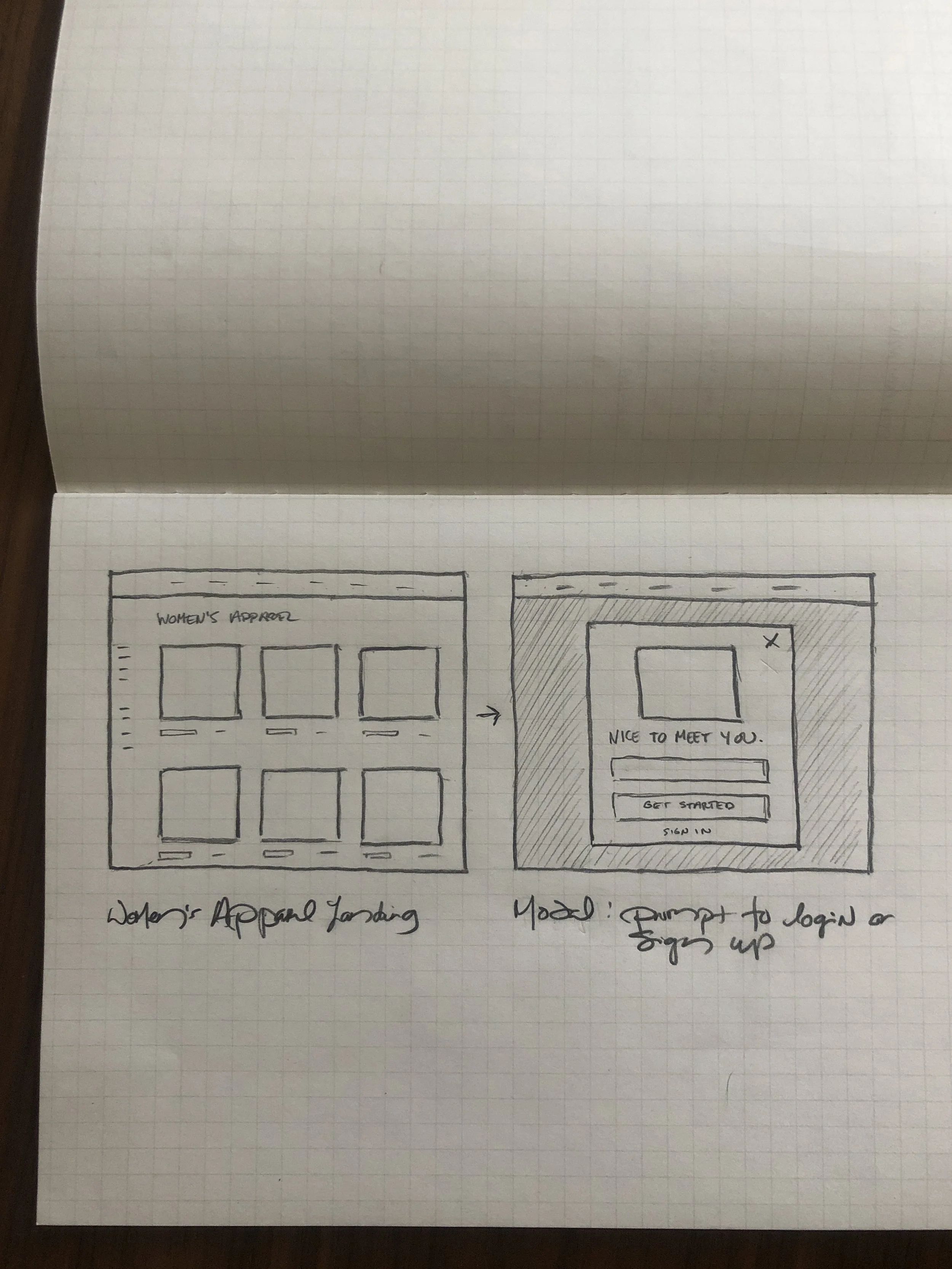
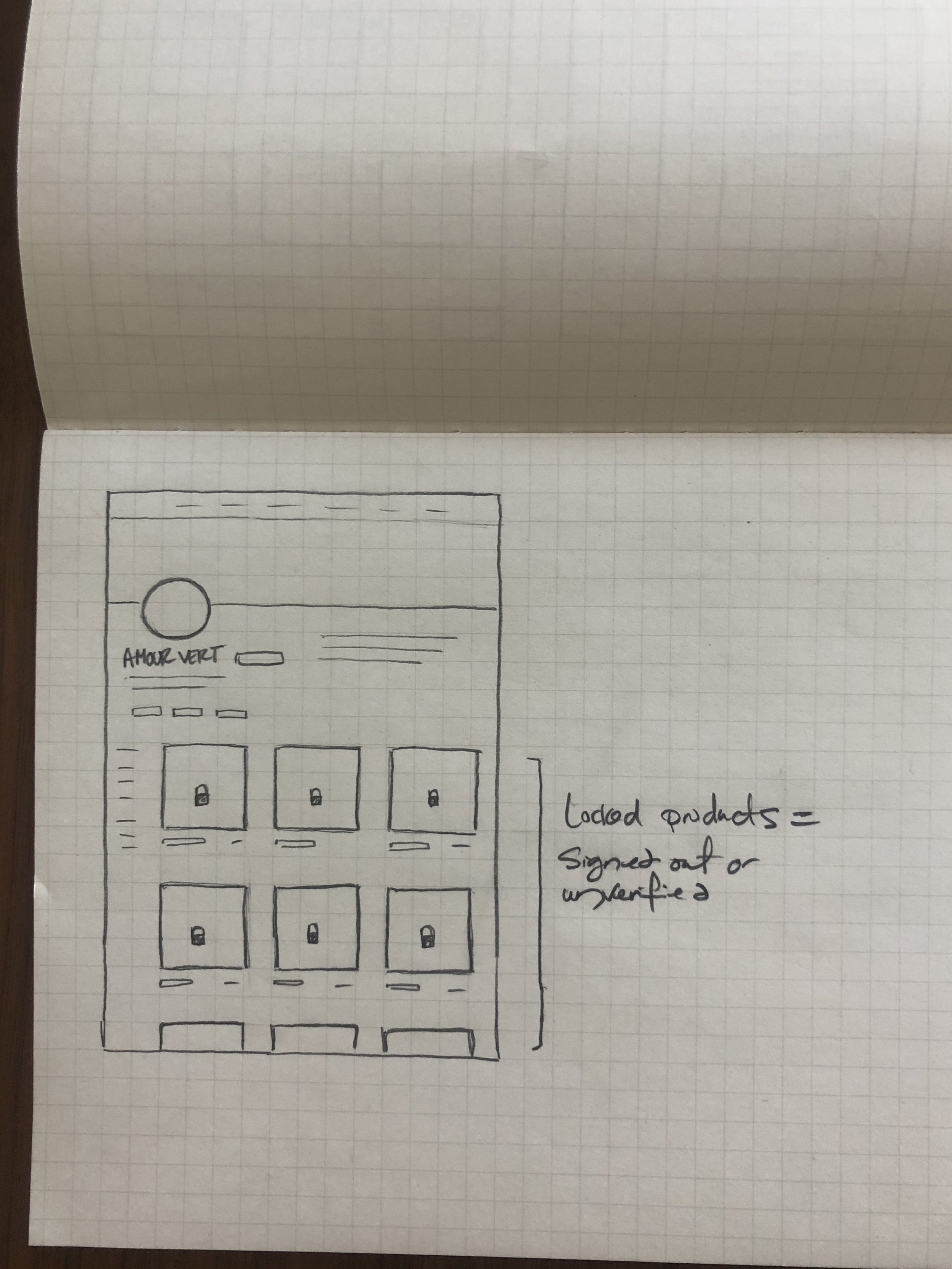
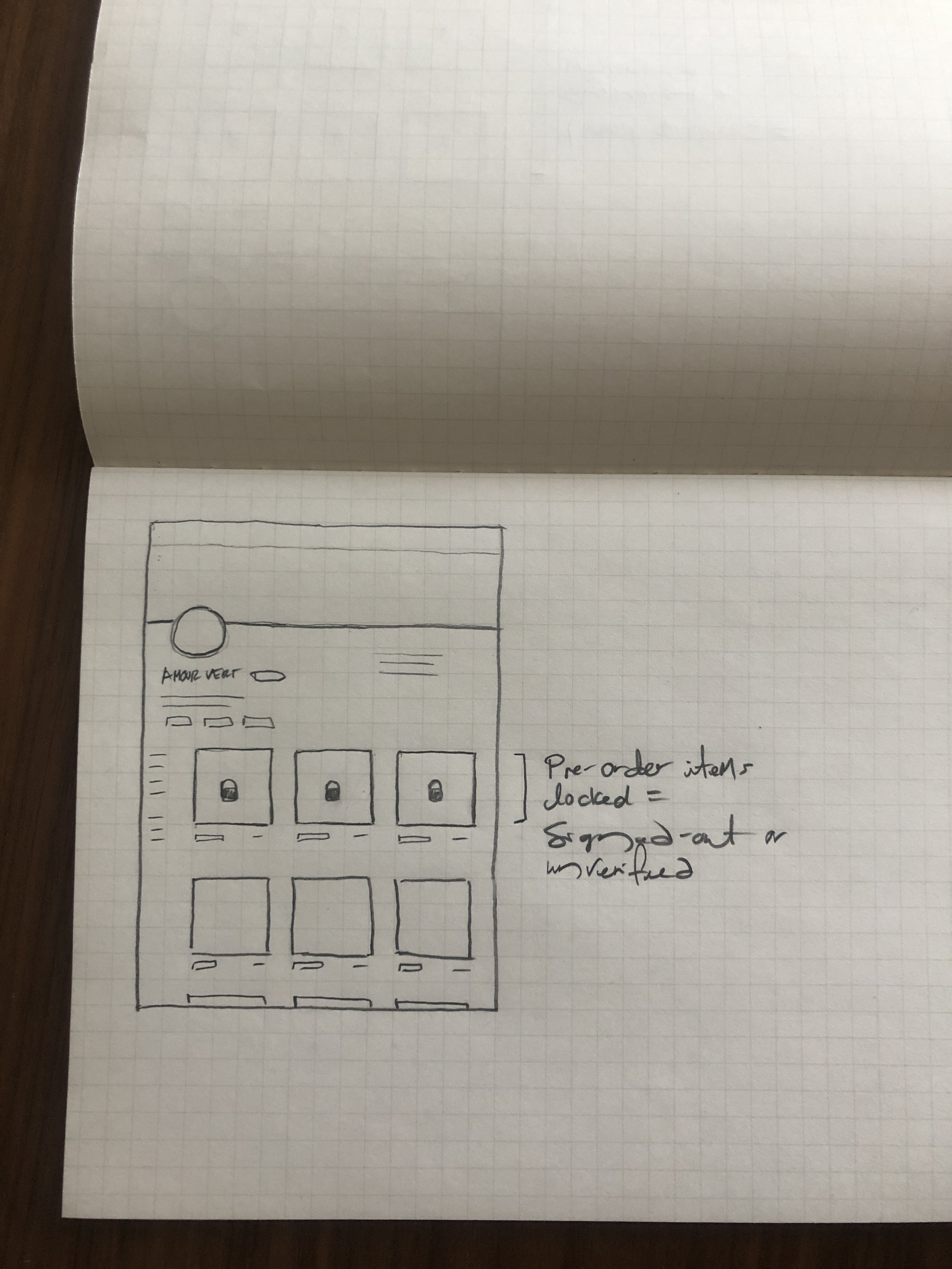
We began with an overwhelming number of sketches to map out potential solutions quickly. Because of the urgent timeline and an aggressive engineering schedule, we opted to bypass low-fidelity wireframes completely. I usually hesitate to skip that step, but the speed of the project required moving directly from raw sketches to high-fidelity designs to keep the development team unblocked.
the Gated Marketplace Experience
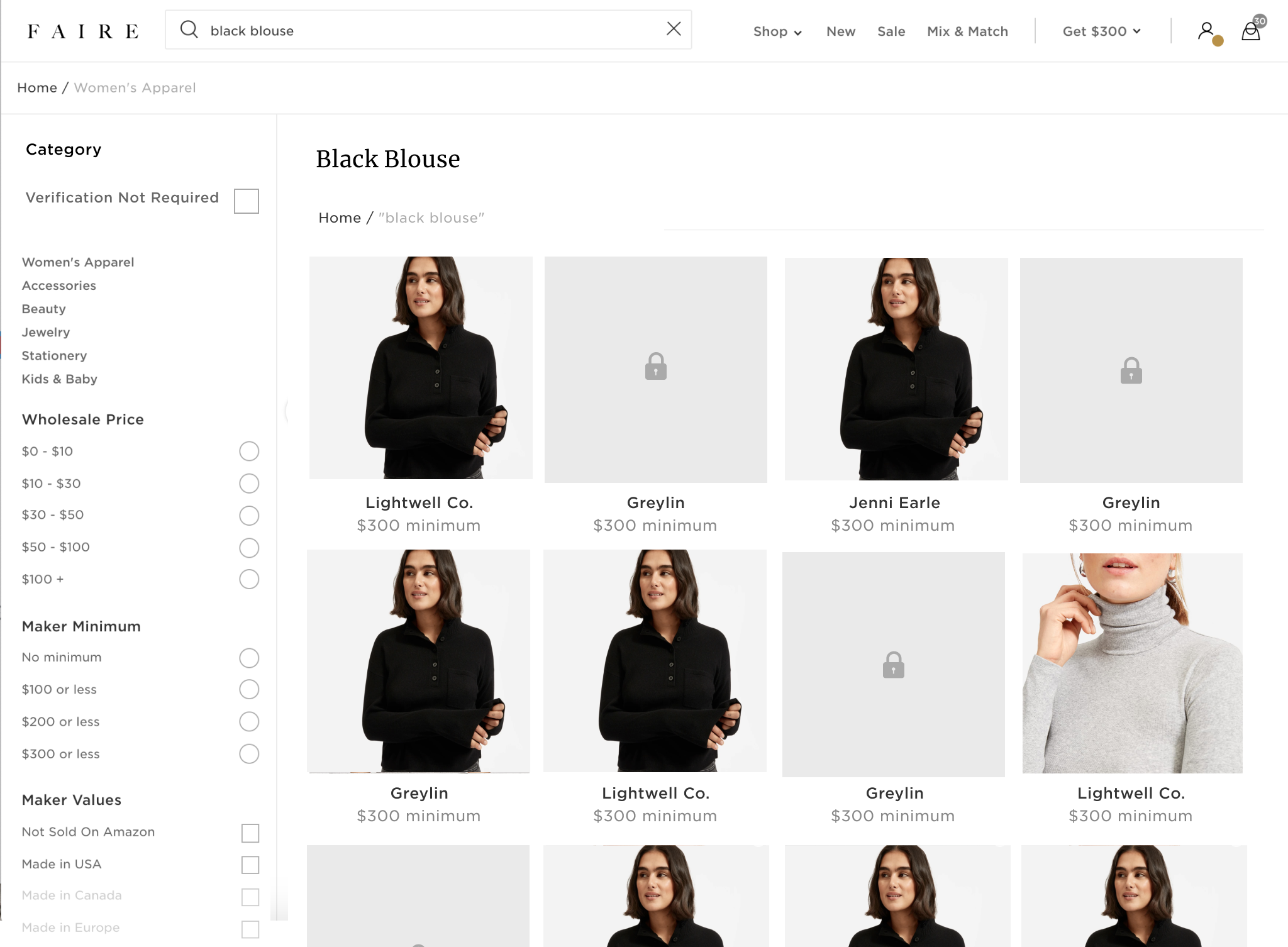
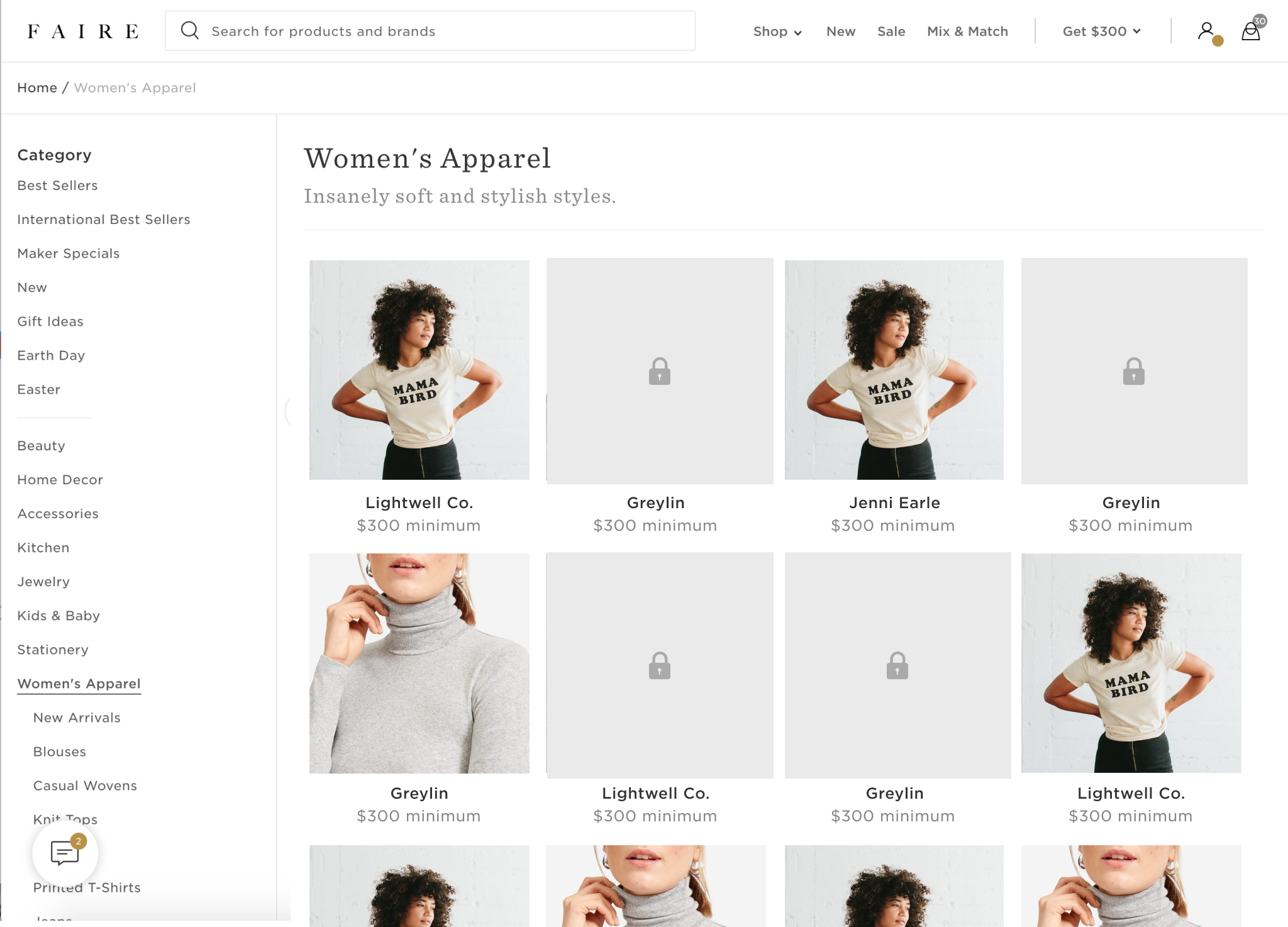
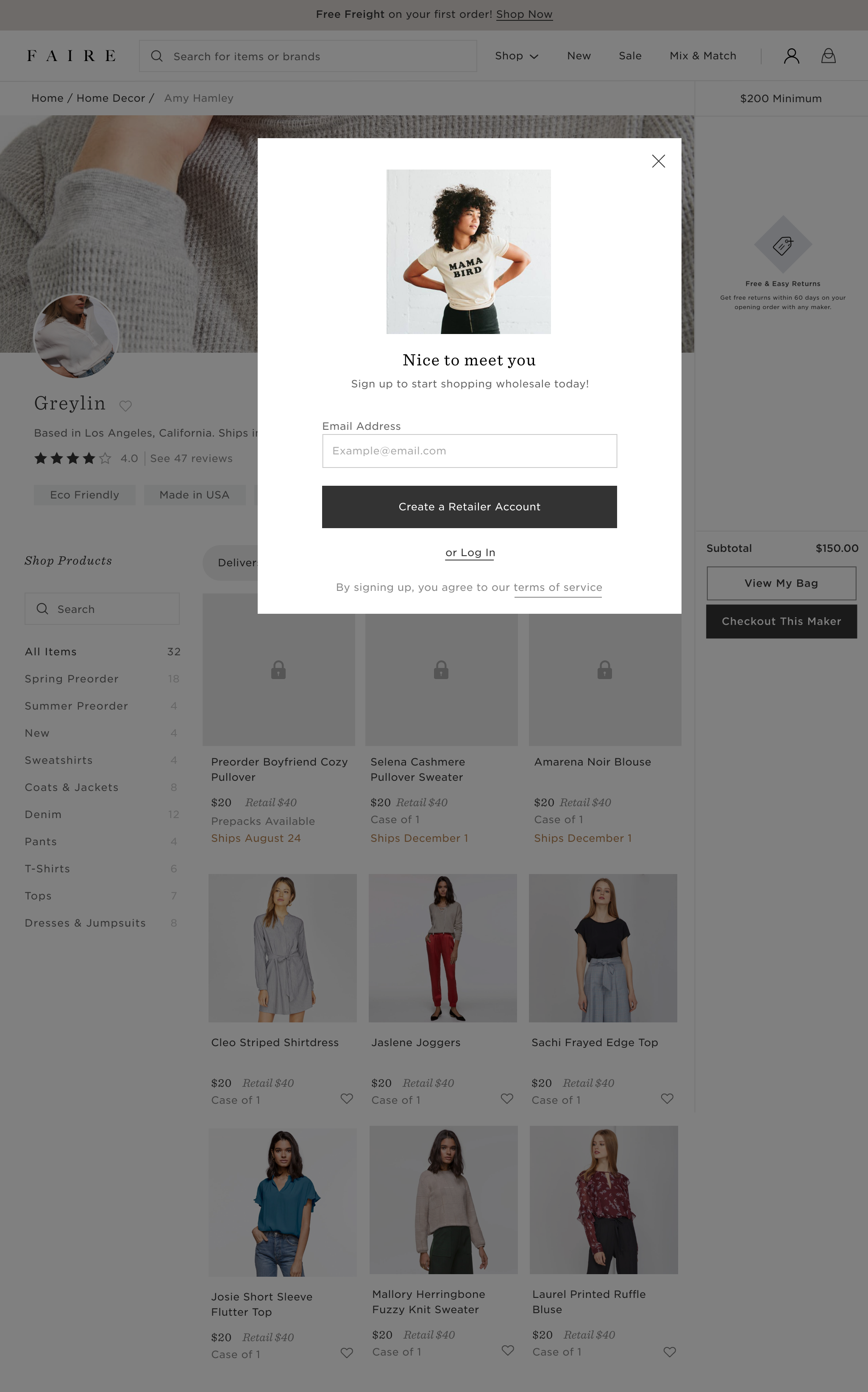
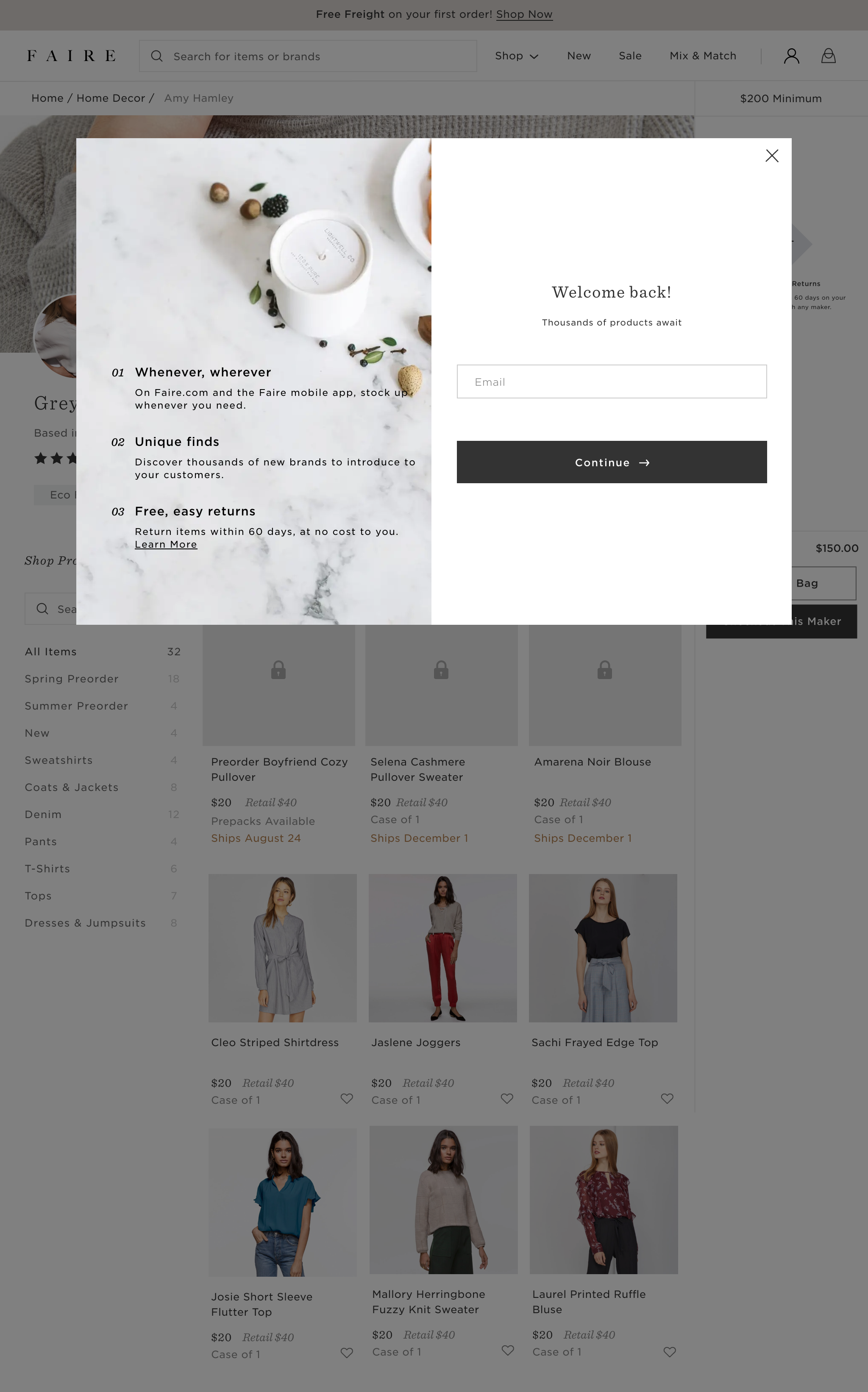
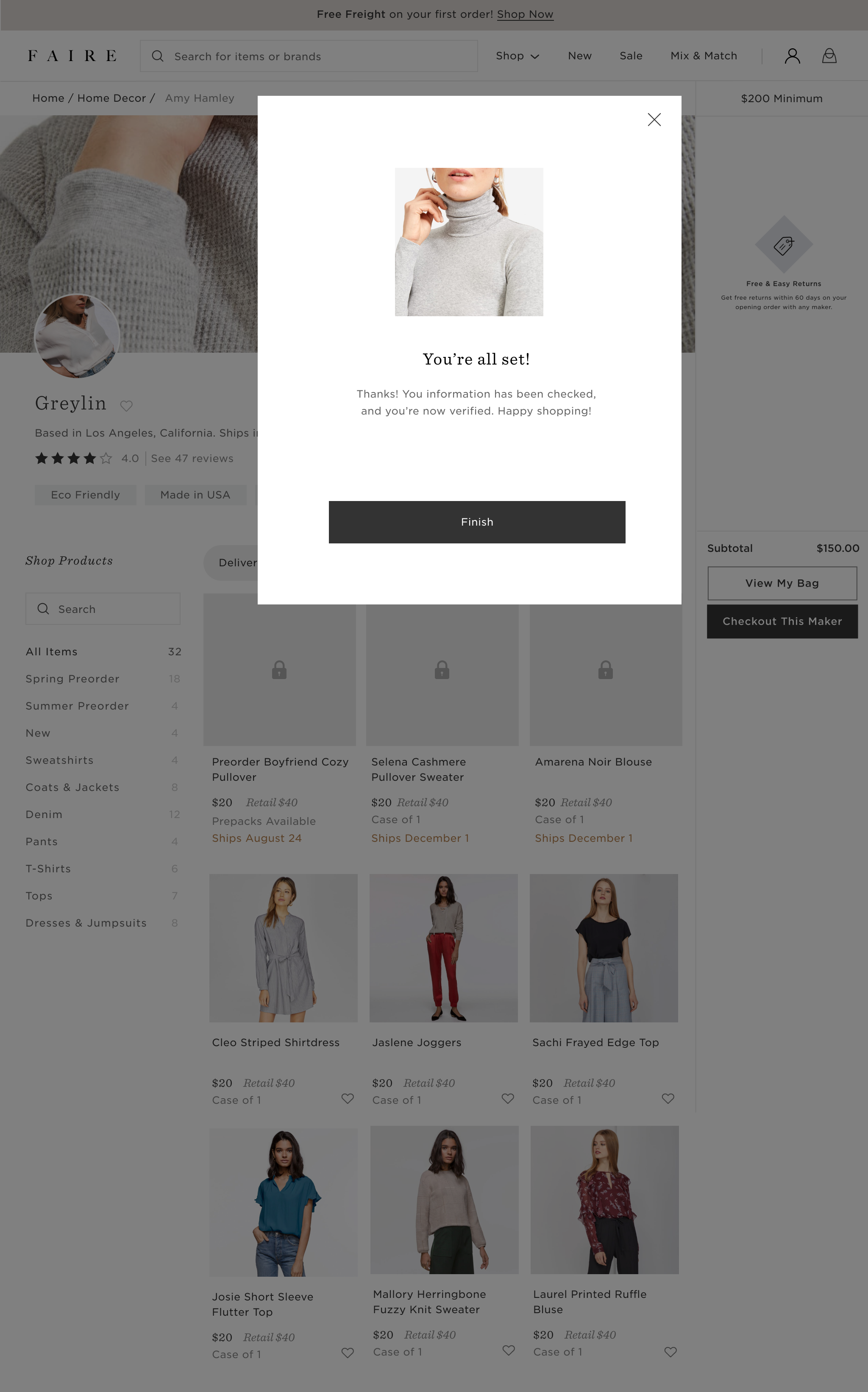
We focused on handling locked items within the search and category browsing views. We decided that showing obscured or locked items alongside public items would satisfy a retailer's desire to evaluate the platform's variety without exposing sensitive brand details.
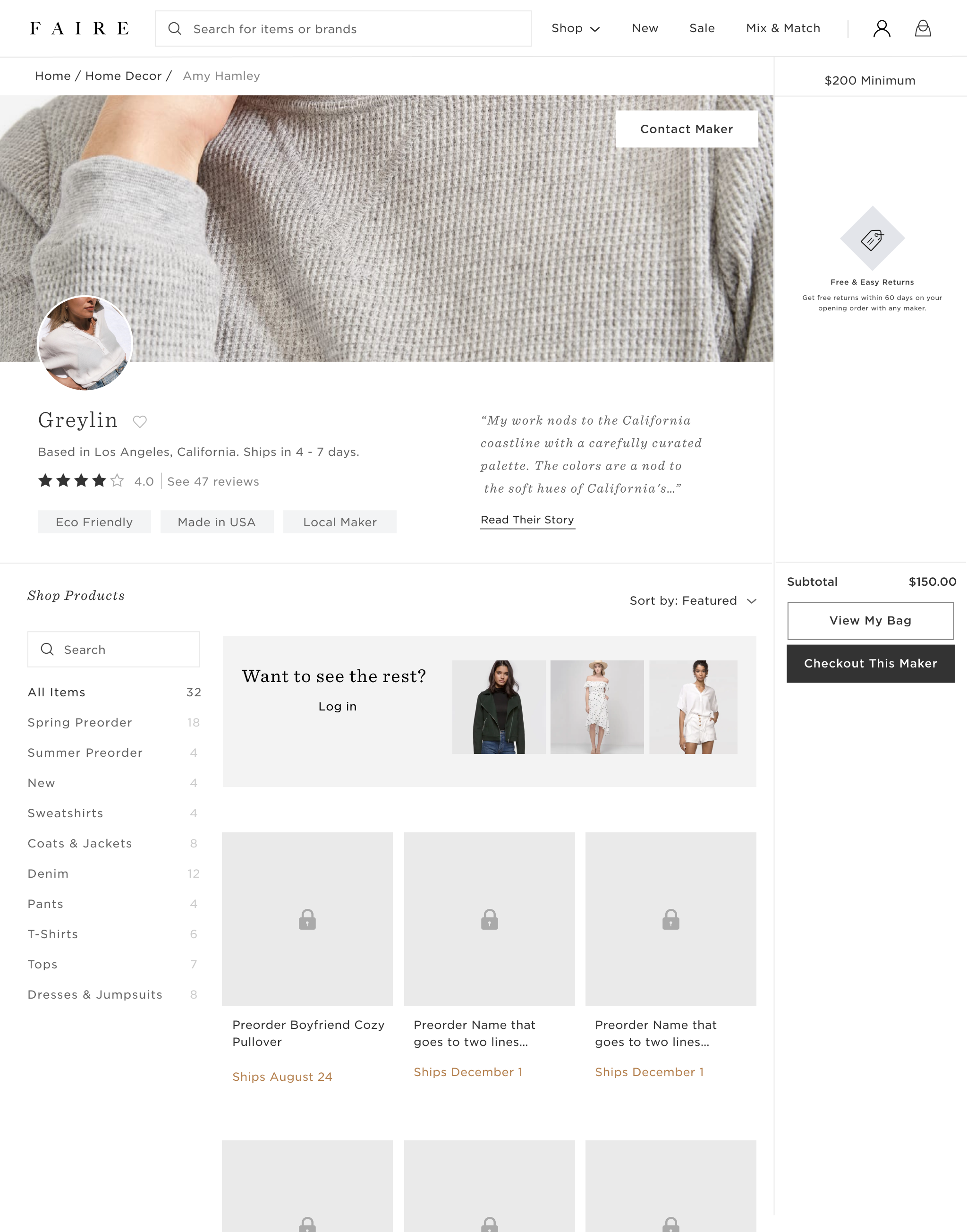
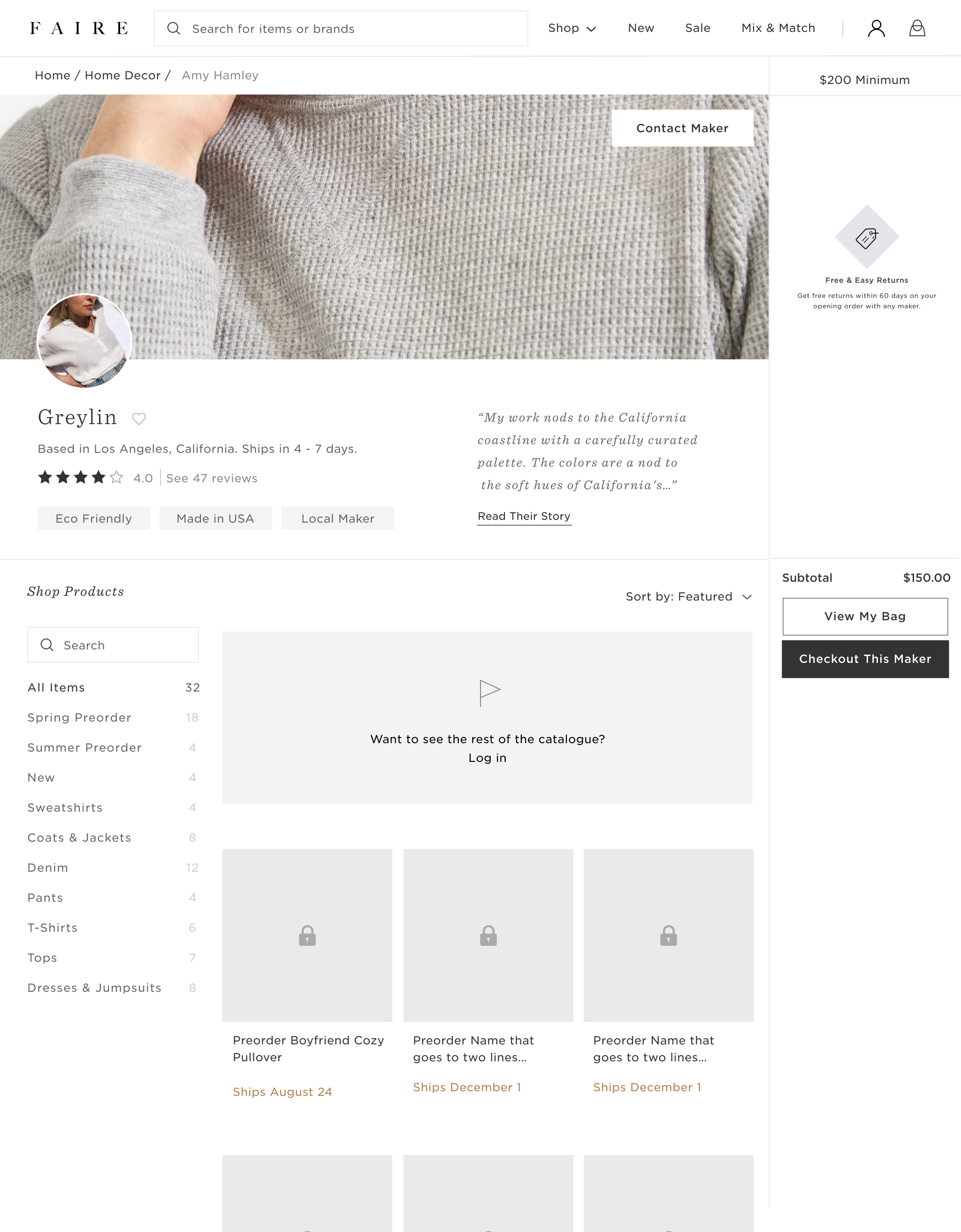
The real challenge emerged on the brand landing page. If a retailer hit a solid wall of locked content, they would almost certainly leave the platform out of frustration. If we showed too much, the makers would lose trust. I iterated on multiple visual treatments to find a compromise that signaled value to legitimate buyers while locking down sensitive preorder catalogs.
Checking in With Brands
After analyzing the trade-offs, we built a high-fidelity prototype that hid sensitive preorder items from unverified or logged-out users, while leaving standard stock visible. I took this prototype into evaluative user interviews with active makers to stress-test our assumptions and see if this level of privacy actually made them feel secure.
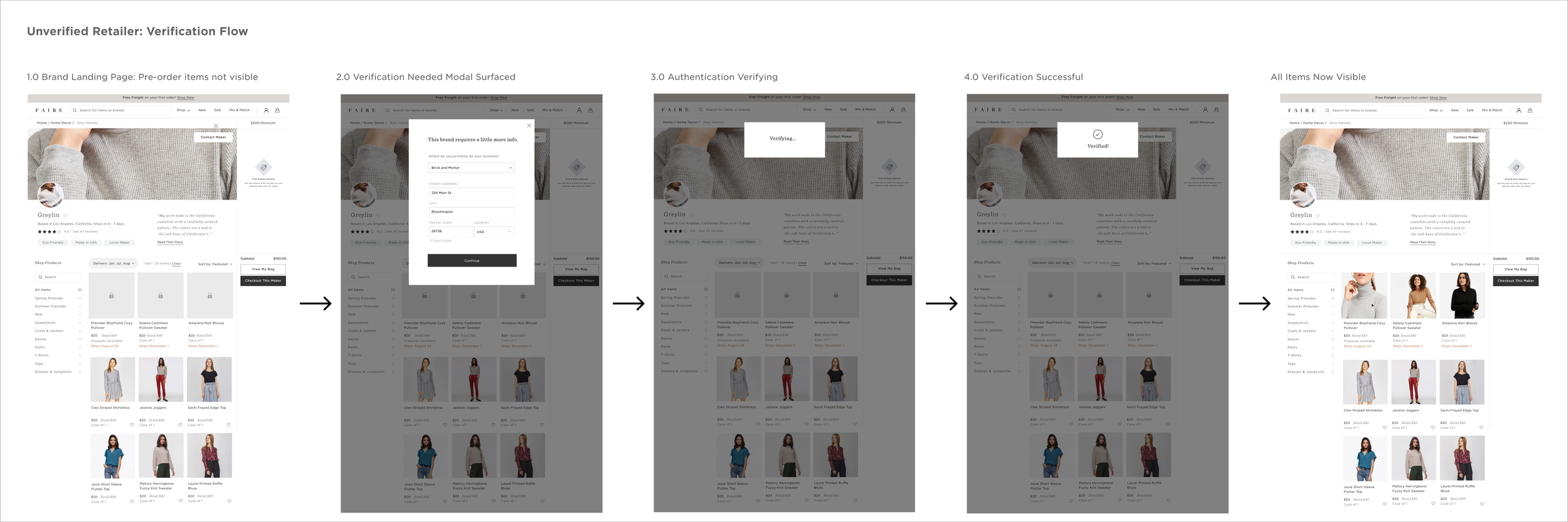
Pivot: Putting Control in the Hands of the Maker
Maker feedback was eye-opening. Shielding pre-orders helped, but makers told us their inventory strategies changed all the time. Instead of a rigid rule from Faire, they wanted control over when and where items showed up. That realization changed our whole approach. We moved away from a one-size-fits-all rule and built a flexible system where makers could manage their own privacy. Because defaulting items to visible favored the business over the suppliers, I pushed for clear onboarding steps that called out the default policy right away and showed makers how to change it.
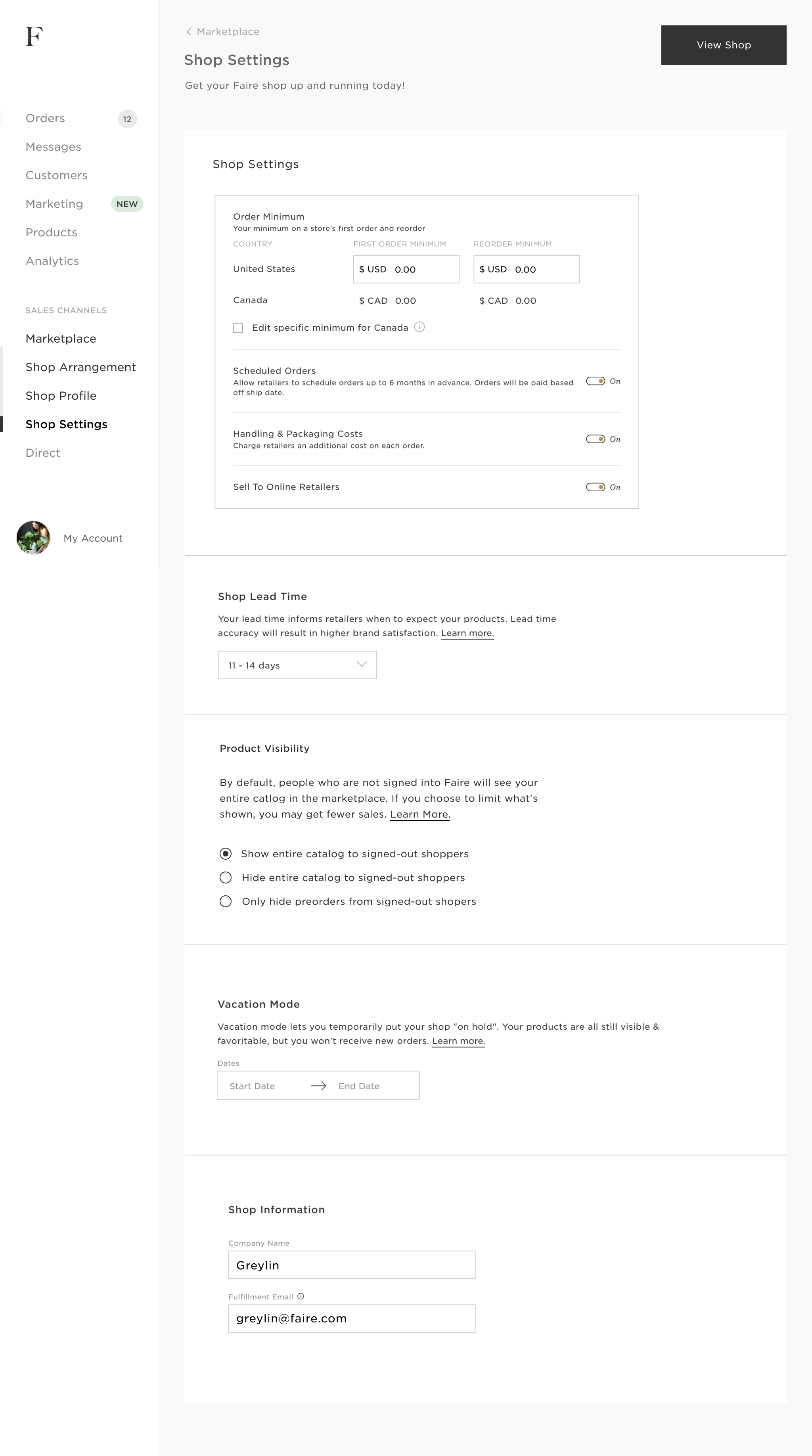
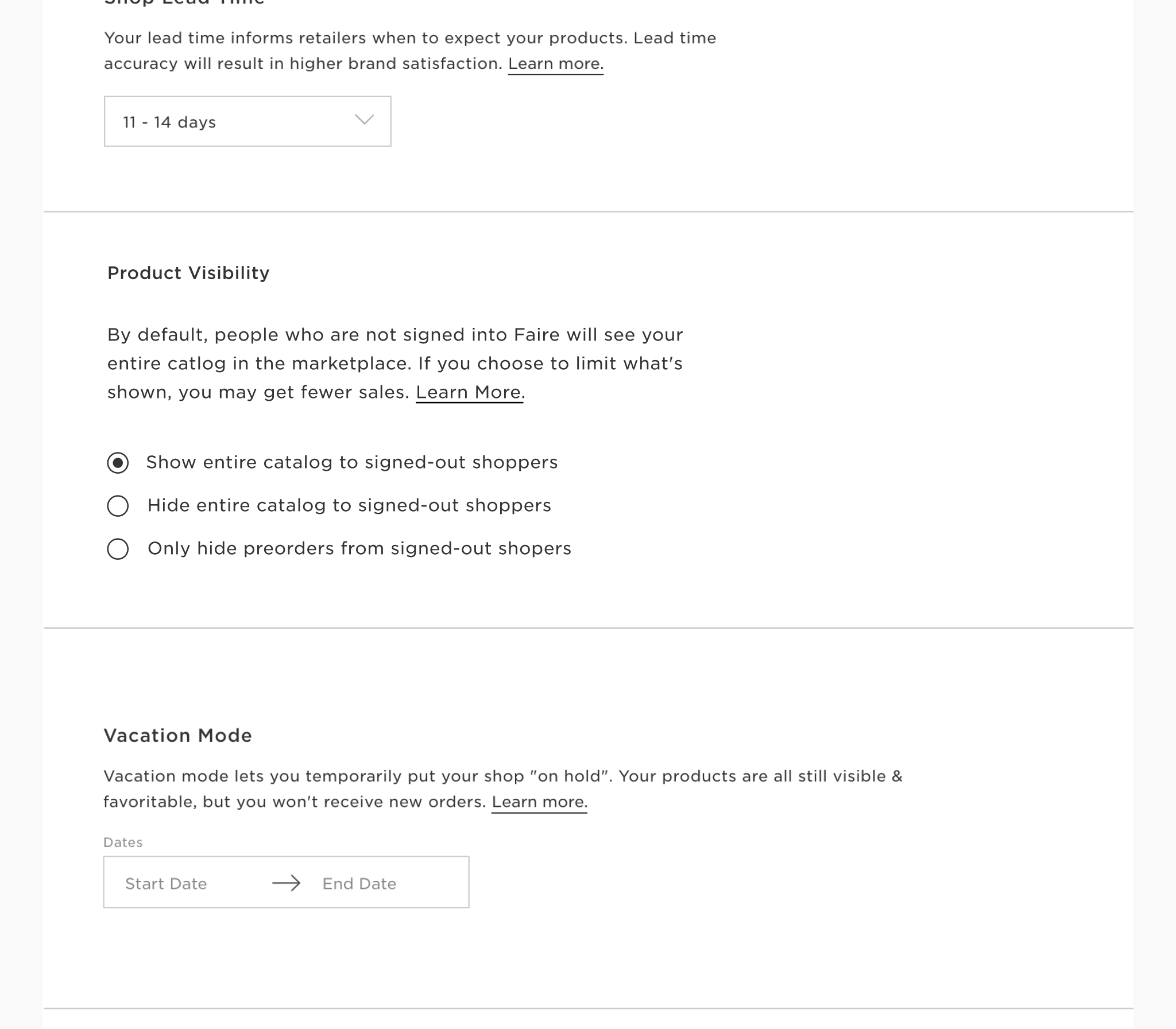
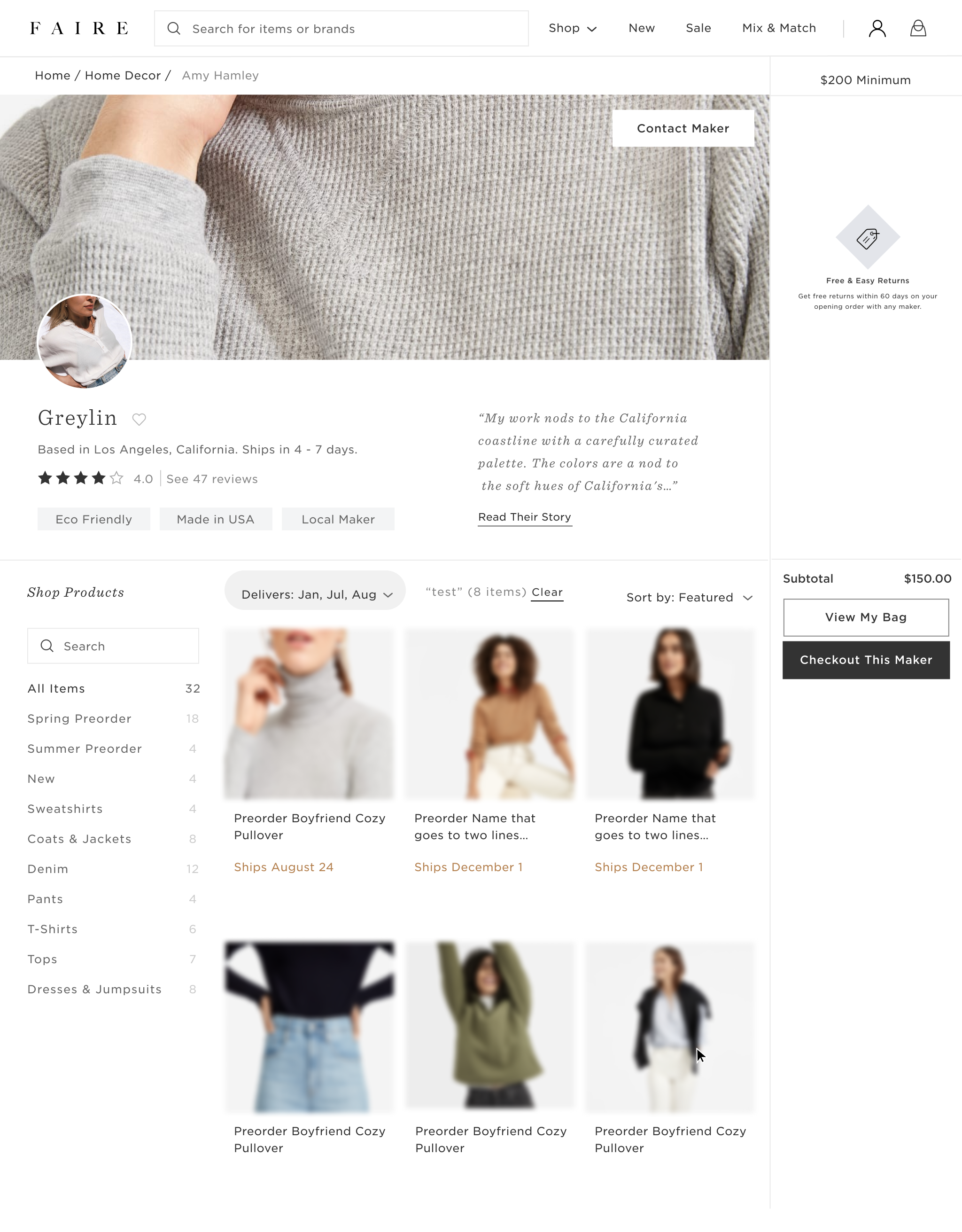
Final Designs | Flow: User Not Logged In, But a Verified Retailer
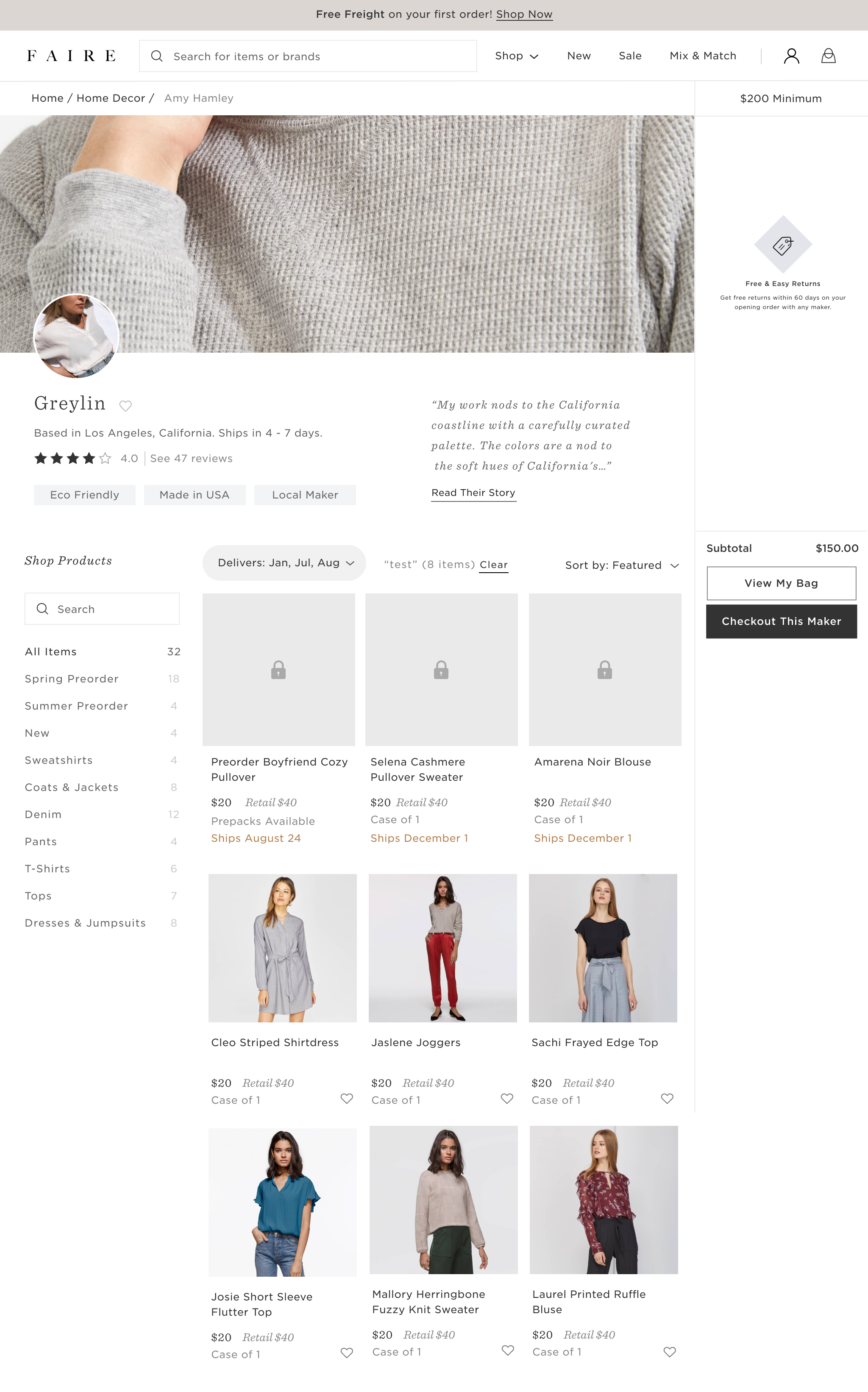
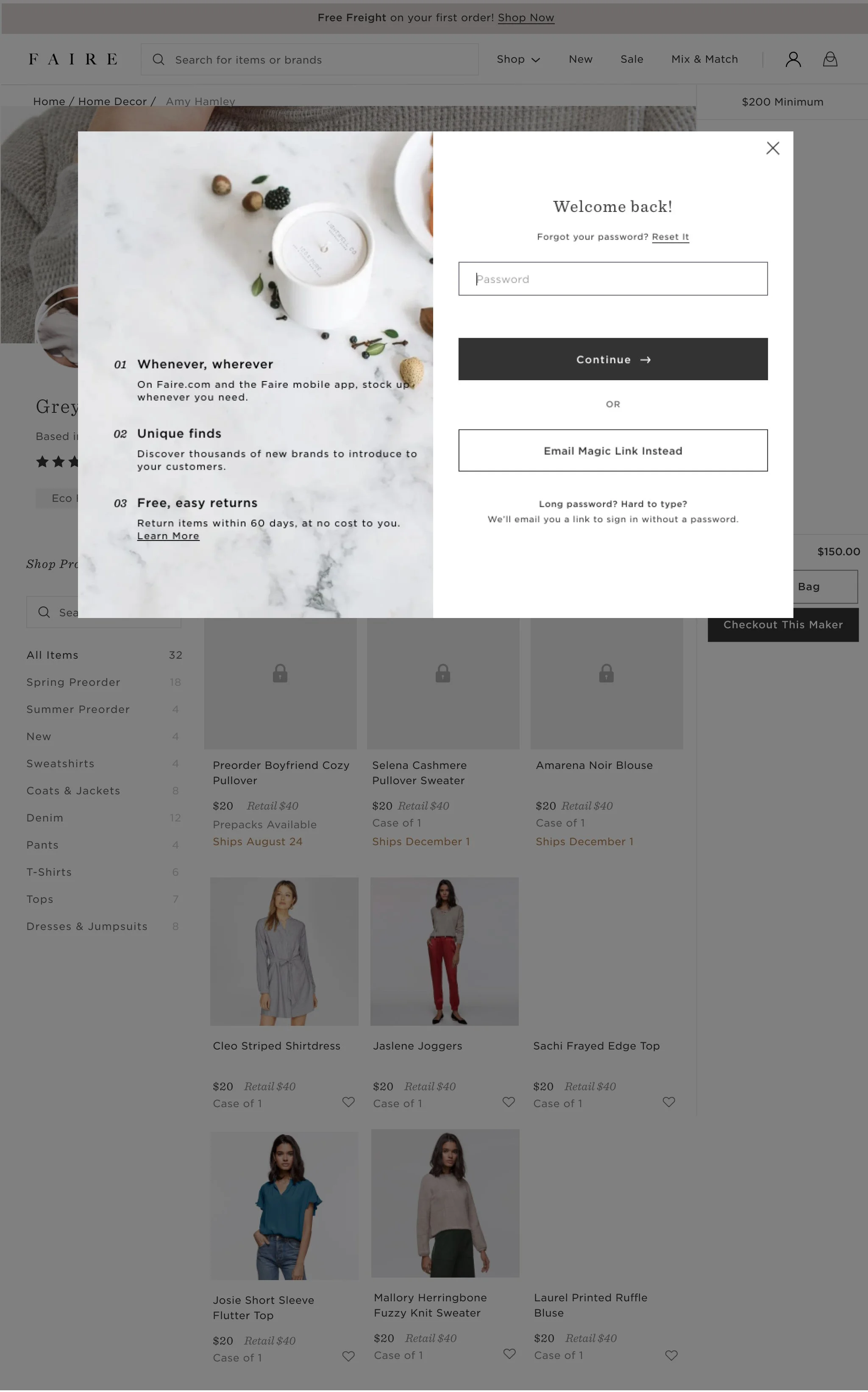
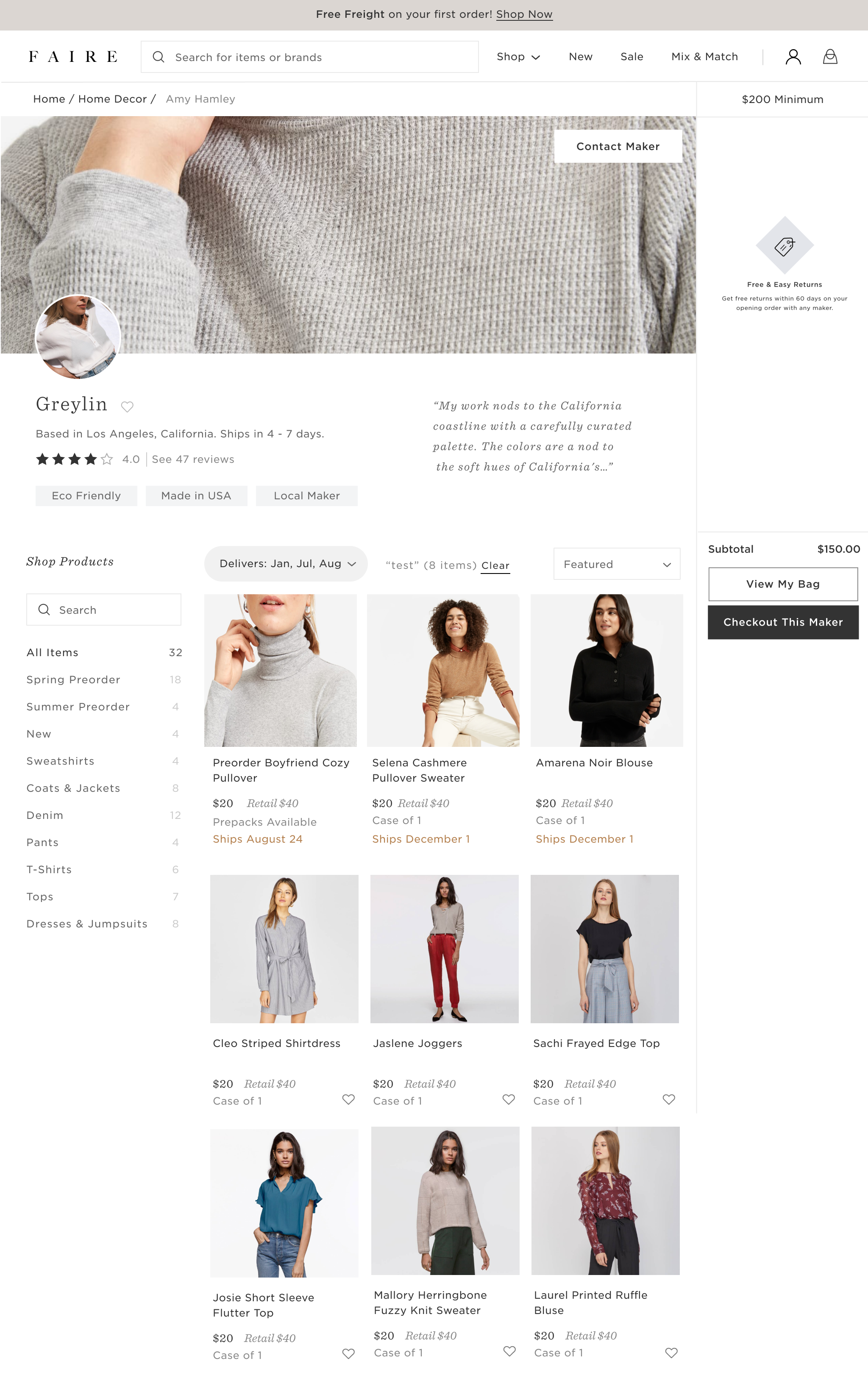
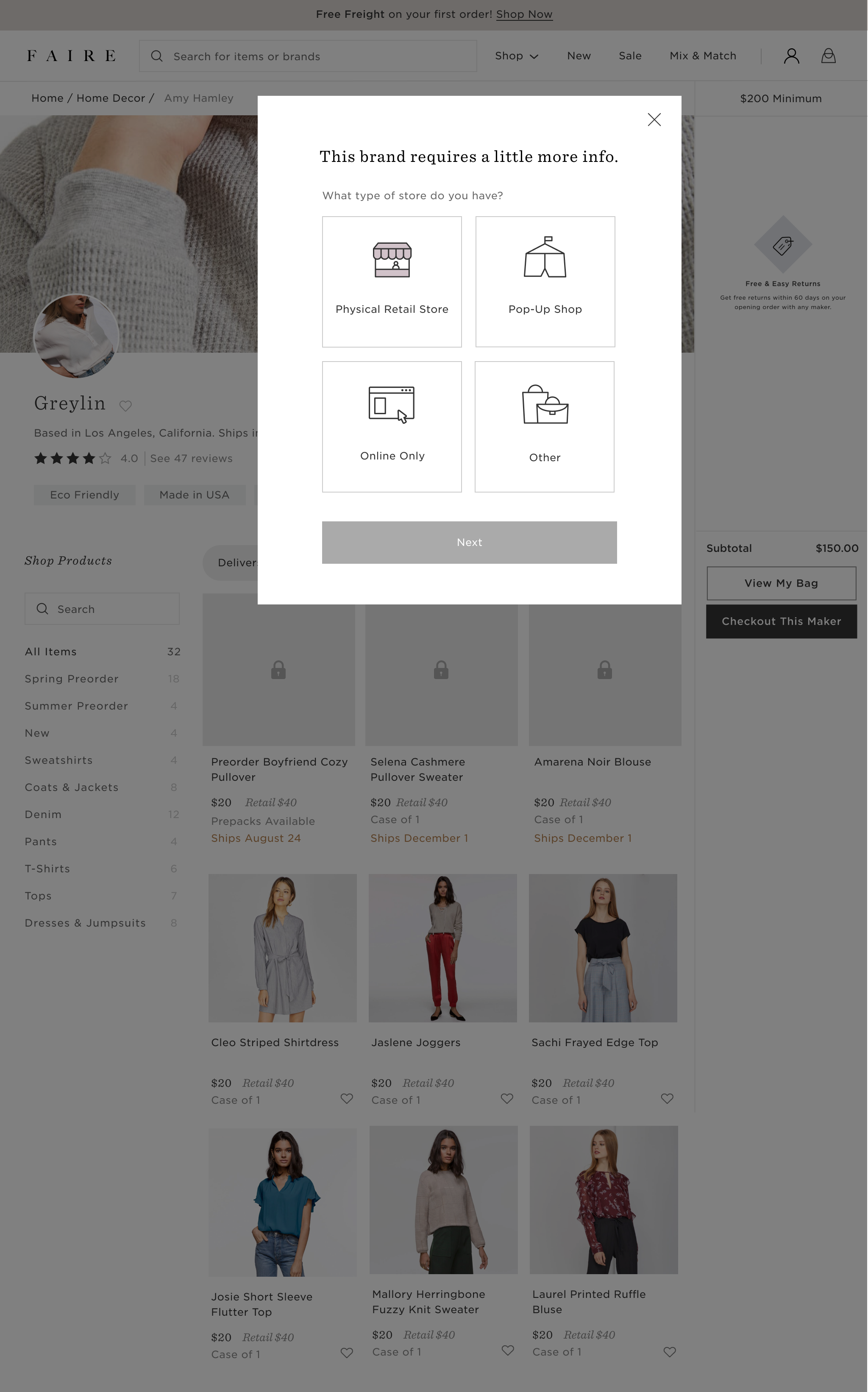
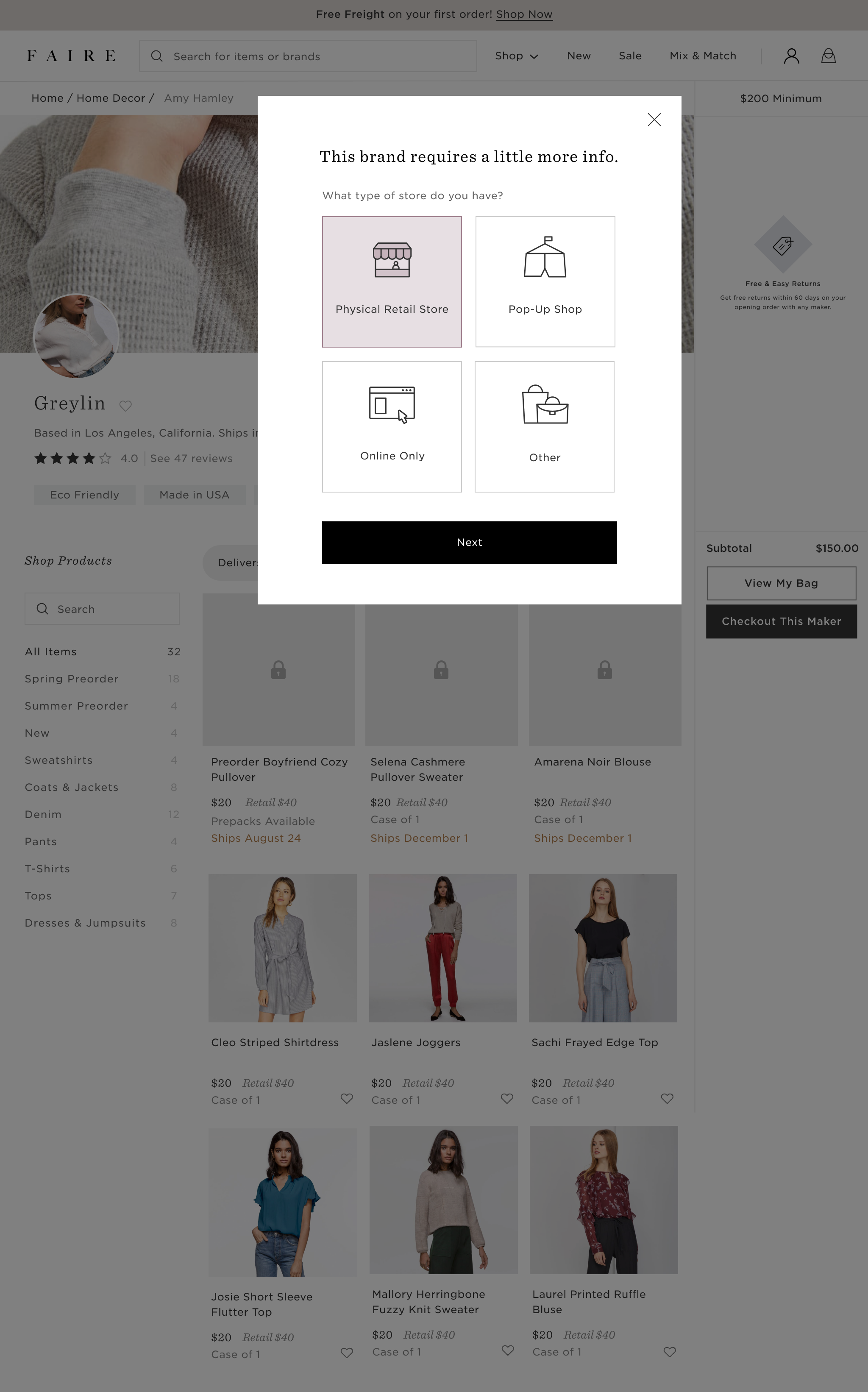
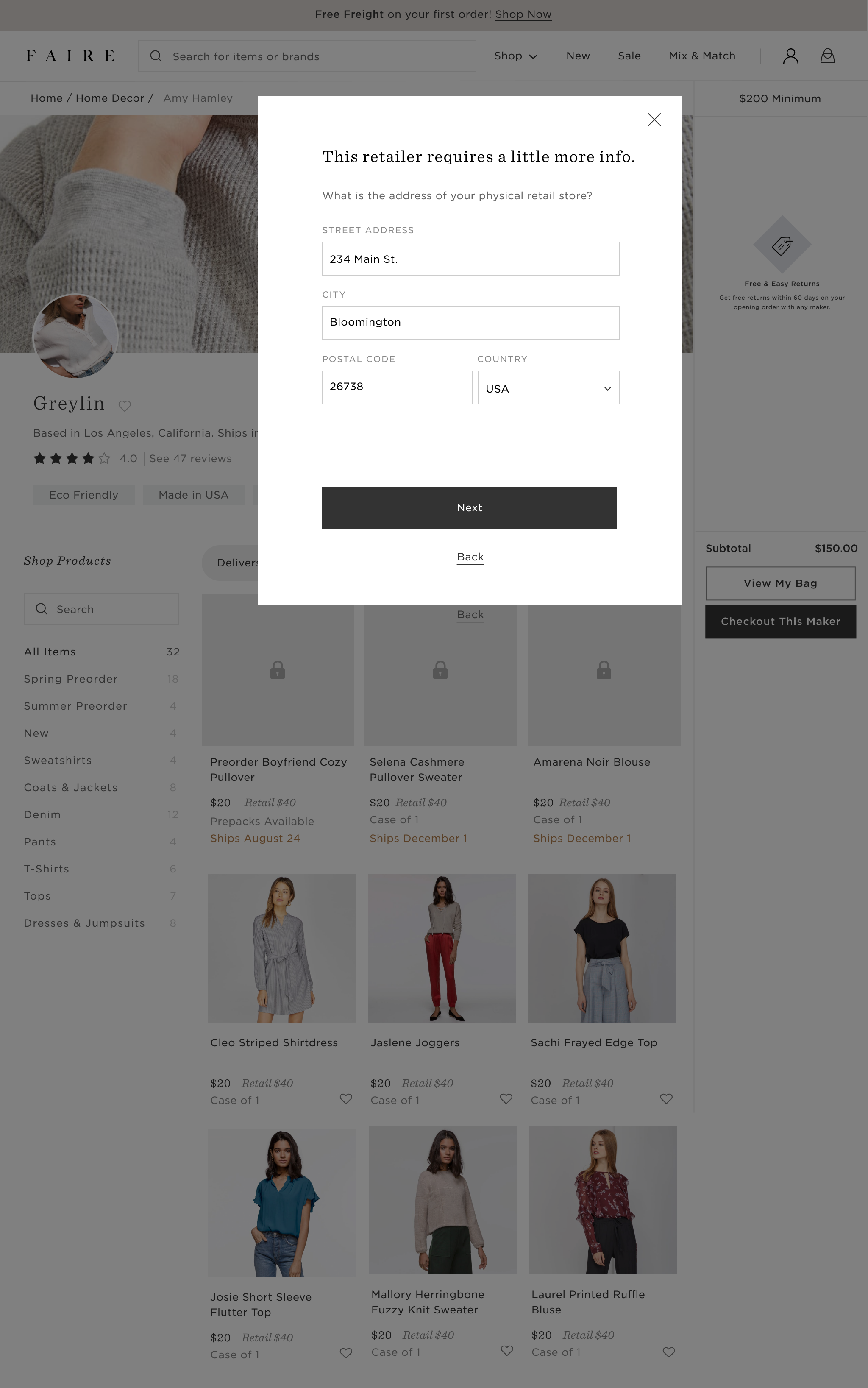
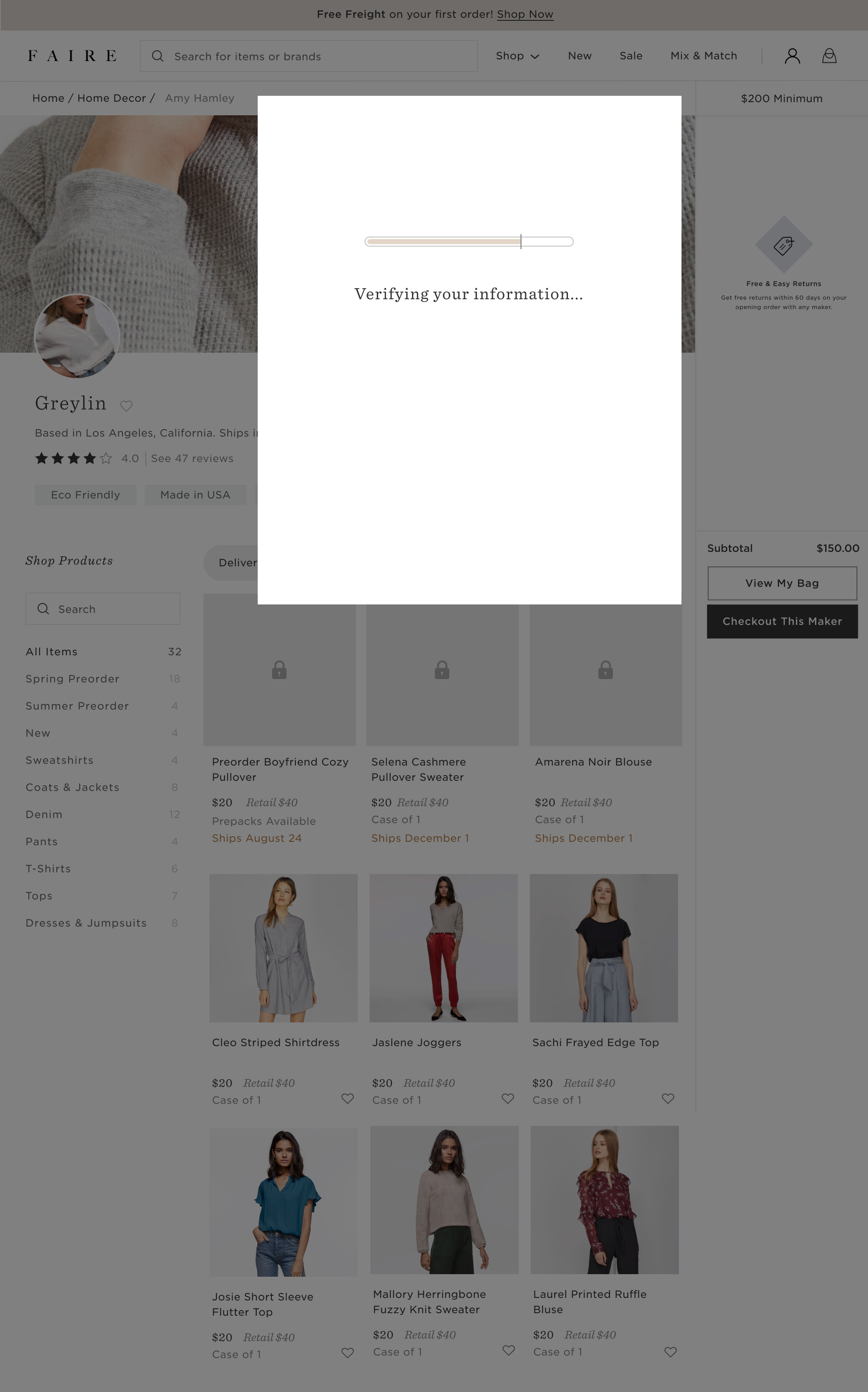
Final Designs | Flow: User Logged In, But Not a Verified Retailer
The Impact
The final design system successfully deployed tailored onboarding flows for both logged-in and logged-out retail states. By giving makers clear levers to control their exposure, we unlocked the supplier bottleneck and safely scaled the marketplace.
531 High-Quality Apparel Brands Formally Acquired by Q3
100% Target Achievement for the Apparel Expansion Initiative