Meta: Gen AI For Growth
On the Growth team at Meta on the initiative to establish a foundational UX strategy for generative AI tools specifically targeting Facebook marketers. In absence of an existing framework, my priority was to bridge the gap between complex prompt engineering and practical utility for advertisers. I conducted the strategic research and cross-functional workshops required to map the opportunity space, translate model capabilities into intuitive layout logic, and align the team on a unified product direction.
My Role: UX Strategy, Research, and Systems Design
Cross-functional Partners: Program Manager, Prompt Engineer, Growth Marketing Manager
Duration: 2 months
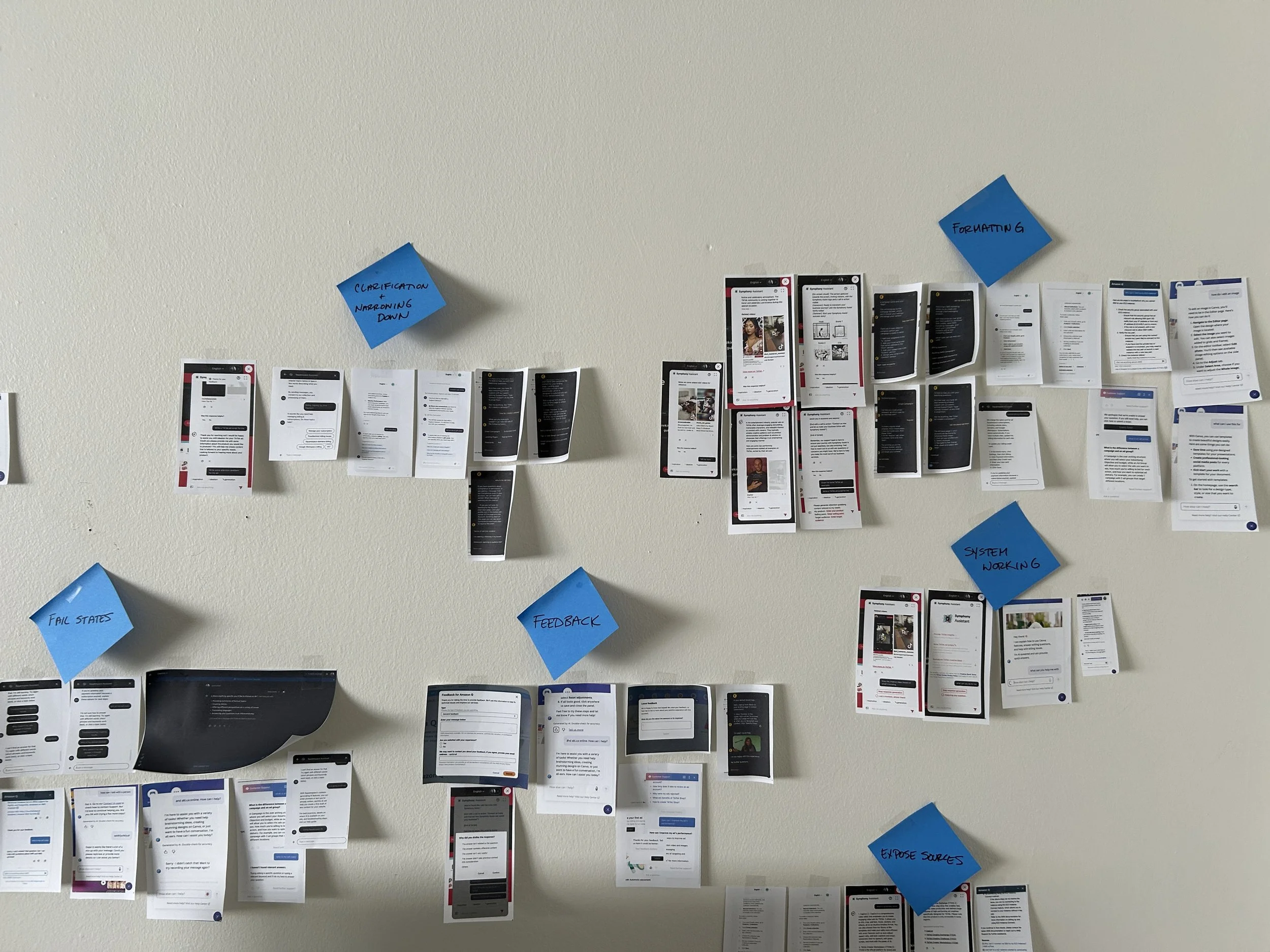
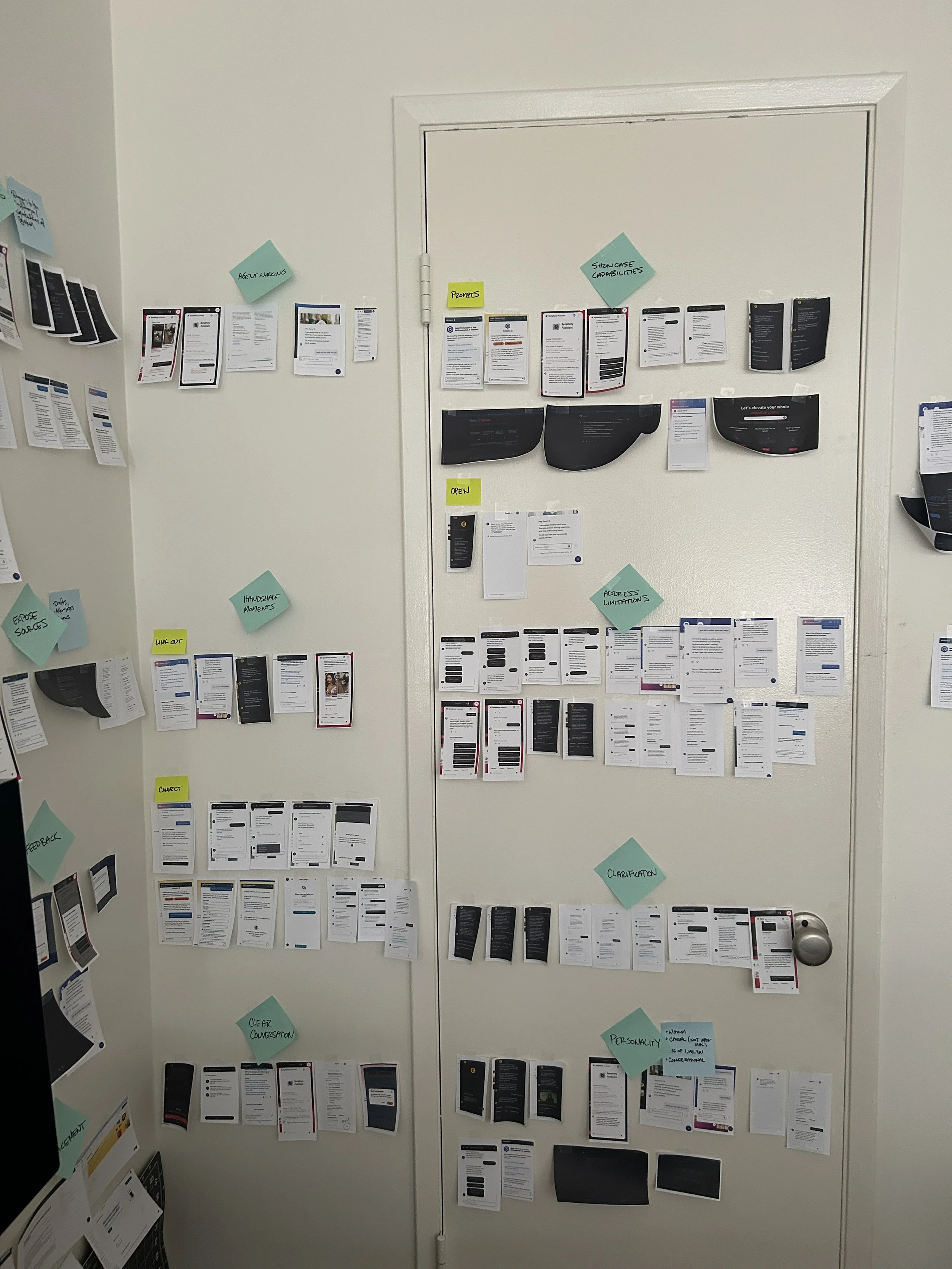
The project began in an ambiguous place with no existing UX framework. To ground the technical capabilities of the models, I partnered with the program manager to isolate focus areas within the advertising lifecycle. I established our baseline by conducting an extensive competitive and comparative audit of existing generative AI experiences across the industry, evaluating platforms ranging from TikTok and Squarespace to Canva and Shopify. By analyzing how these diverse systems handled automated inputs, I identified critical friction points and patterns in how marketers shift tasks between web dashboards, chat boxes, email updates, automated texts, and voice channels. This research allowed us to map qualitative user needs directly to generative AI capabilities across the entire multi-surface lifecycle.
Decoding Multi-Surface Marketer Workflows
Aligning Cross-Functional Parameters
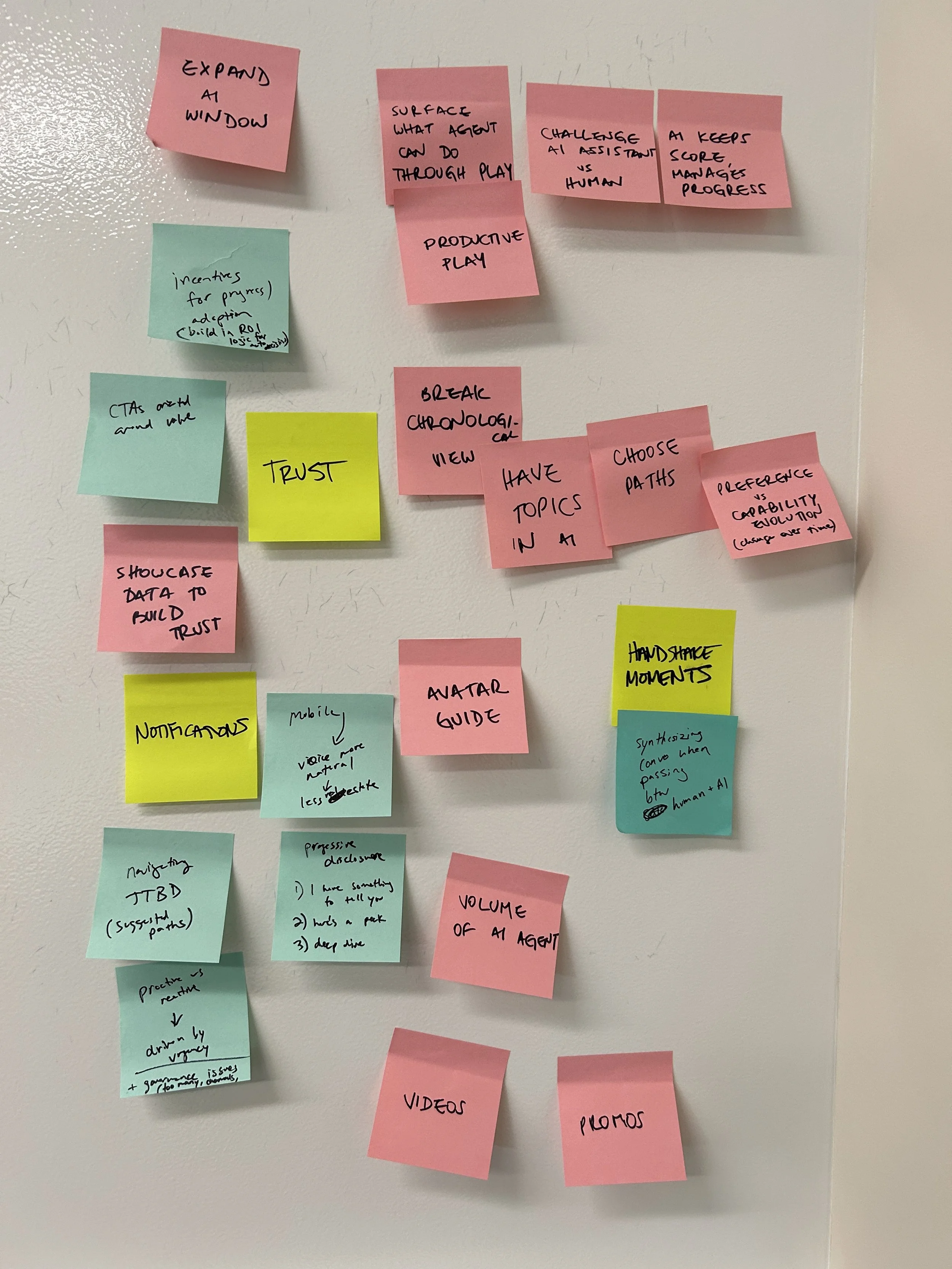
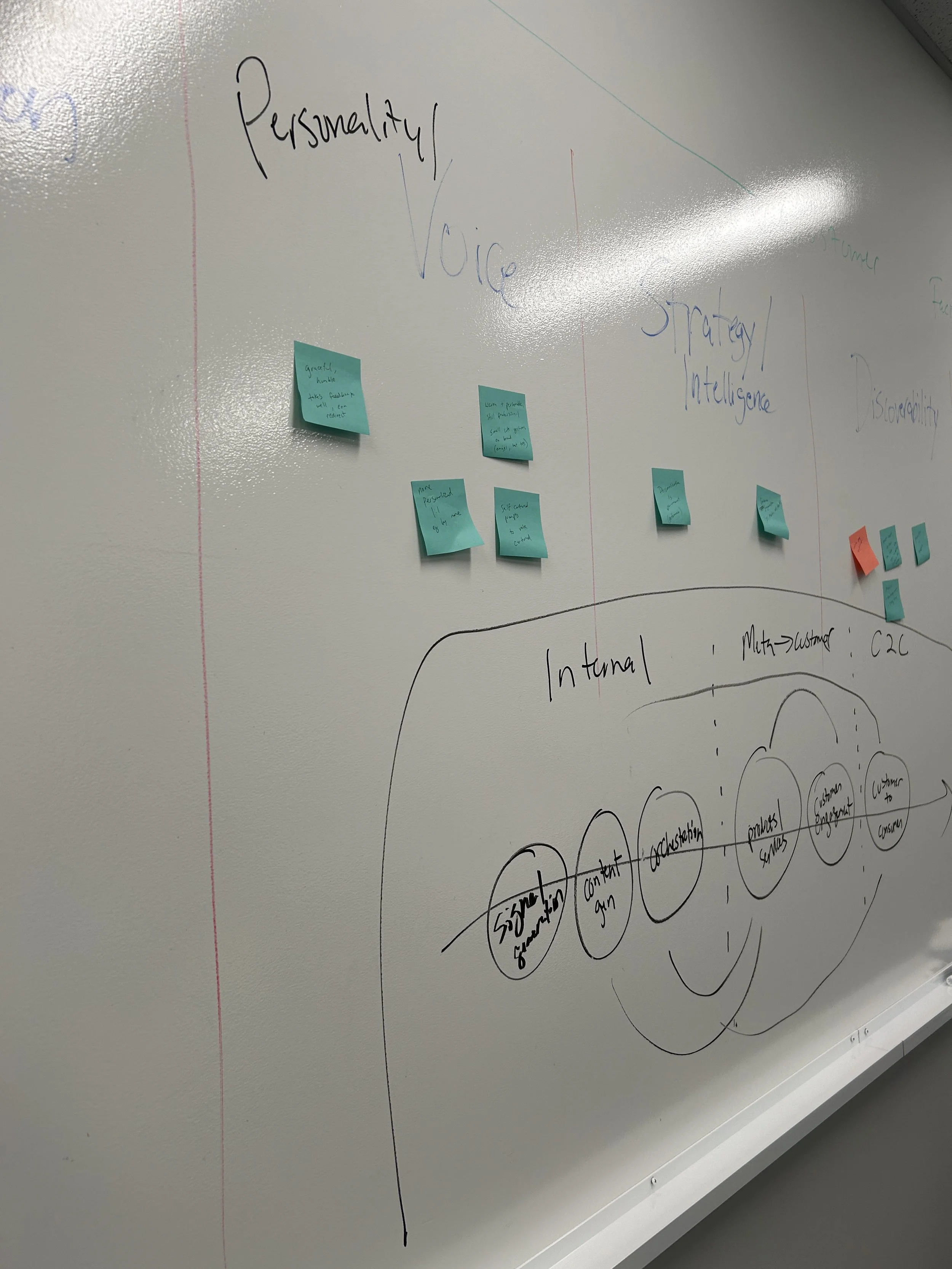
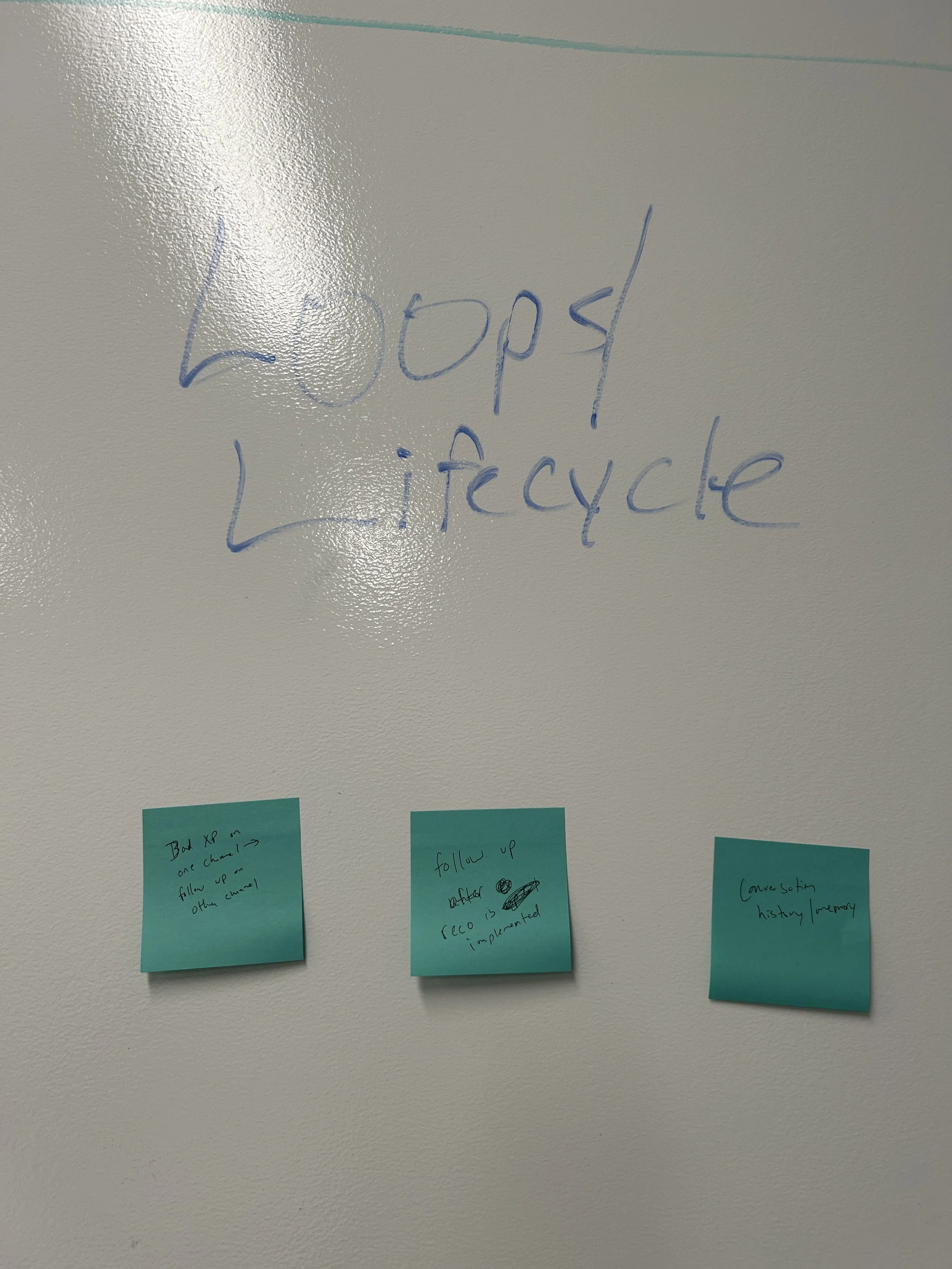
Translating complex prompt engineering into predictable user interfaces across varied surfaces requires strict alignment. In support of this, I organized and facilitated a multi-day cross-functional workshop with the prompt engineer and growth marketing manager. The goal of these sessions was to map out our strategic levers and define the tools in our toolbox. Together, we established the foundational design principles, system personality, and surface distribution strategies. We also analyzed discoverability, actionability, and the overall lifecycle loops of the experience, aligning the team on a definitive framework for how to execute against these parameters.
Final Framework
I synthesized our research, workshop alignments, and tactical mapping into a definitive executive blueprint. This document defined the core requirements for a universal container architecture, mapping the layout logic for how structured data lists and rich editorial grids adapt across web, chat, text, and voice surfaces. Documenting these systemic behavioral rules preserved the foundational product vision, providing leadership with a validated, comprehensive North Star for the initiative.